
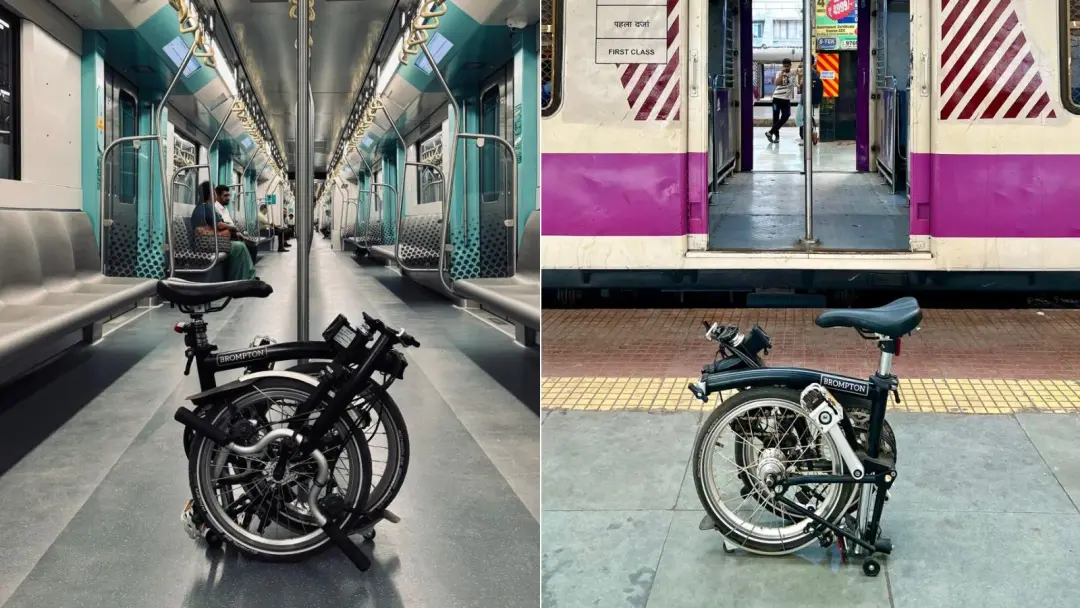
MMRCL bars cycles on Mumbai Metro Line 3; planners question rule
MMRCL has confirmed that commuters cannot carry bicycles, including foldable ones in folded or packed condition, on Mumbai's underground Metro Line 3 (Aqua Line) premises or trains, citing prevailing security guidelines. Architect Pranav Naik, who had used his foldable cycle on the line for a year, was stopped last week and said no explanation was given, though wheelchairs and similarly sized bags are allowed. Urban planners and cyclists said folding cycles help first- and last-mile connectivity.
Source
Indian Express — Cities · read the original report ↗
Desk check · compared with the source
What the desk checked (5)
- Bicycles, including foldable ones in folded or packed condition, are not permitted on Metro Line 3 premises or trains. — Directly attributed to an MMRCL statement citing prevailing security guidelines.
- Architect Pranav Naik carried his foldable bicycle on Line 3 for a year before being stopped last week. — First-person account attributed to Naik; not independently confirmed in the source.
- The rule is not new and the line was built expecting a large volume of passengers. — Attributed to an unnamed MMRCL spokesperson.
- Line 3 lags in ridership. — Stated by the reporter without figures or a named source.
- Folding bicycles are allowed on other Mumbai metro lines and local trains. — Based on Naik's experience of facing no objections; no official confirmation in source.
Analysts’ view opinion
ఇది పైకి చూస్తే ఒక చిన్న నిబంధన వివాదం, కానీ రాజకీయంగా ఇది ముంబై పట్టణ పాలనలోని అతిపెద్ద బలహీనతను — ప్రజా రవాణా ప్రాజెక్టుల్లో "నిర్మాణం" గొప్పగా చూపించడం, "వినియోగదారు అనుభవం" వెనుకబడిపోవడం — బయటపెడుతుంది. లైన్-3 ఆశించిన ప్రయాణికుల సంఖ్యను అందుకోలేదని అధికారులే అంగీకరిస్తున్న దశలో, ఫస్ట్/లాస్ట్ మైల్ అనుసంధానాన్ని కుదించే నిర్ణయం ప్రతిపక్షాలకు, పట్టణ కార్యకర్తలకు సులభమైన ఆయుధం ఇస్తుంది. అదే నగరంలోని ఇతర మెట్రో లైన్లలో ఇలాంటి ఆంక్ష లేదన్న అంశం, పాలనలో సమన్వయ లోపం అనే విమర్శకు బలం చేకూర్చుతుంది.
- ఎంఎంఆర్సీఎల్ వాదన 'రద్దీ' ఆధారితం, కానీ లైన్-3 ప్రయాణికుల సంఖ్య అంచనాల కంటే తక్కువగా ఉందని కథనమే చెబుతోంది — ఈ వైరుధ్యమే రాజకీయ ప్రశ్నలకు కేంద్రం అవుతుంది.
- వీల్చైర్లు, అదే పరిమాణంలోని బ్యాగులు అనుమతిస్తూ మడత సైకిళ్లను నిరాకరించడానికి స్పష్టమైన వివరణ ఇవ్వకపోవడం, నిబంధన కంటే కమ్యూనికేషన్ వైఫల్యమే ఎక్కువ నష్టం చేసే అంశం.
- పర్యావరణ హిత, బహుళ-రవాణా (మల్టీ-మోడల్) విధానం అనే ప్రభుత్వ ప్రచార కథనానికి ఈ నిర్ణయం విరుద్ధంగా కనిపిస్తుండటం వల్ల, ప్రతిపక్షాలు దీన్ని 'పెద్ద ప్రాజెక్టులు, చిన్న ఆలోచన' అనే ఫ్రేమ్లో పెట్టే అవకాశం ఉంది.
- ముంబైలో నగర పాలన ఏజెన్సీల మధ్య అధికార పంపిణీ (మెట్రో సంస్థలు, బెస్ట్, రాష్ట్ర పట్టణాభివృద్ధి విభాగం) చెల్లాచెదురుగా ఉండటం వల్ల ఒకే నగరంలో వేర్వేరు నిబంధనలు కొనసాగుతున్నాయనే విమర్శకు ఇది ఉదాహరణగా మారగలదు.
- సైక్లిస్టులు, పట్టణ చలనశీలత నిపుణులు సంఖ్యాపరంగా చిన్న వర్గమే అయినా, మధ్యతరగతి పట్టణ ఓటరు దృష్టిని ఆకర్షించే 'జీవన సౌలభ్యం' అంశంగా ఇది పెరిగే శక్తి కలిగి ఉంది.
What to watch — ఎంఎంఆర్సీఎల్ ఈ నిబంధనను భద్రతా కారణాలతో లిఖితపూర్వకంగా సమర్థిస్తుందా, లేక ఇతర మెట్రో లైన్లతో సమానంగా సడలిస్తుందా — మరియు రాష్ట్ర పట్టణాభివృద్ధి స్థాయిలో ఏదైనా జోక్యం జరుగుతుందా అనేది గమనించాలి.
ఈ కథనం నిబంధన ఎప్పుడు, ఎవరి ఆదేశంతో అమల్లోకి వచ్చిందో, ఏ నిర్దిష్ట భద్రతా విశ్లేషణ ఆధారంగా రూపొందిందో స్పష్టం చేయలేదు; ఏ రాజకీయ పార్టీ లేదా నేత ఇప్పటివరకు దీనిపై అధికారికంగా స్పందించారనే సమాచారం కూడా ఇందులో లేదు.
Deep dive
Research brief · 8 facts · 3 dates · exam-readyThe brief
Context
Mumbai's Metro Line 3, the Aqua Line, is the city's first fully underground metro corridor, built and operated by the Mumbai Metro Rail Corporation Limited (MMRCL). A Mumbai architect who had been carrying his foldable bicycle on the line for a year to travel between Mahim and Fort was stopped by staff last week and told cycles were not allowed. MMRCL has since confirmed that bicycles, including foldable ones in folded or packed condition, are barred from Line 3 premises and trains under "prevailing security guidelines" — a restriction cyclists and urban planners say undercuts first- and last-mile connectivity.
Key facts
- MMRCL statement: bicycles, including foldable bicycles in folded or packed condition, are not permitted on Mumbai Metro Line 3 (Aqua Line) premises or trains, as per prevailing security guidelines.
- Architect Pranav Naik, cofounder of Studio Pomergrante, had carried his foldable cycle on the underground Line 3 for a year before being stopped last week.
- Naik used the folding cycle to shuttle between his office in Mahim and a project site in Fort.
- He says guards and metro officials cited a 'new rule' but gave no explanation, though wheelchairs and similarly sized bags are allowed; he was eventually let through.
- An MMRCL spokesperson said the rule is not new and that the line was built expecting a large volume of passengers; the source notes Line 3 lags in ridership.
- Naik reports facing no objection while carrying the folded cycle on Mumbai local trains, BEST buses, other Mumbai metro lines, and metros in other Indian cities.
- Firoza Dadan, Mumbai's first bicycle mayor, said a folding bicycle is a practical solution for first- and last-mile problems.
- Vijay Malhotra, cycling blogger and founder of Pedal and Tring Tring, said the restriction dilutes the core purpose of a multi-modal transport system and MMRCL should align with other metro lines.
Timeline
- About one year before the incidentPranav Naik begins regularly carrying his foldable bicycle on the underground Metro Line 3 between Mahim and Fort, without objection.
- Last week (date not stated in the source)Naik is stopped by guards and metro officials who say cycles, folding or otherwise, are not allowed; he is eventually allowed through.
- SubsequentlyMMRCL confirms in a statement that bicycles, folded or packed, are barred from Line 3 premises and trains under prevailing security guidelines.
Who has a stake
- Mumbai Metro Rail Corporation Limited (MMRCL) — Operator of Line 3; must balance stated security guidelines and expected crowding against multi-modal integration and its lagging ridership.
- Cyclist-commuters such as Pranav Naik — Lose a low-cost, low-emission first- and last-mile option and face inconsistent enforcement without explanation.
- Cycling advocates (Firoza Dadan, Mumbai's first bicycle mayor; Vijay Malhotra of Pedal and Tring Tring) — Seek inclusion of folding bicycles in transit policy to reduce dependence on rickshaws, taxis and cab-hailing apps.
- Other transport operators (Mumbai local trains, BEST buses, other metro lines) — They permit folded cycles, creating a policy mismatch across the city's networks.
- Autorickshaw, taxi and cab-hailing services — Continue to absorb last-mile demand, which commuters say involves waiting, haggling and refusal to ply by meter.
Why it matters
Metro networks succeed only when riders can reach stations easily; a folding cycle is one of the cheapest ways to solve the first- and last-mile gap in a city where bus frequency is reduced and autos and taxis often refuse to ply by meter. A blanket bar on folded cycles on Line 3 — while wheelchairs and similar-sized bags are allowed and other Mumbai lines permit them — raises questions of consistency and of whether stated green, multi-modal goals are being met. It also matters for a corridor that the source says is falling short of projected ridership.
UPSC angle
Prelims pointers
- Mumbai Metro Line 3 is the Aqua Line, an underground corridor implemented by MMRCL (Mumbai Metro Rail Corporation Limited).
- MMRCL bars bicycles, including foldable ones in folded or packed condition, from Line 3 premises and trains, citing prevailing security guidelines.
- Firoza Dadan is Mumbai's first bicycle mayor.
- 'First- and last-mile connectivity' refers to travel between a commuter's origin/destination and the transit station.
- BEST buses and Mumbai local trains permit folded cycles, per the commuter's account in the source.
- MMRDA, MSRDC, CIDCO and SRA are other Mumbai-region agencies noted in the source's coverage areas.
Mains framing
The dispute over folding bicycles on Mumbai's Aqua Line illustrates how last-mile design choices decide the fate of capital-intensive urban rail. MMRCL justifies the bar on security guidelines and on Line 3 being built for high passenger volumes, yet the source notes ridership is lagging — suggesting that access barriers, not crowding, may be the binding constraint. Commuters point to inconsistency: wheelchairs and similarly sized bags are permitted, and folded cycles are carried on local trains, BEST buses and other Mumbai metro lines and in metros of other Indian cities, so a single corridor's rule fragments an otherwise integrated network. Advocates argue that without cycle access, riders are pushed toward rickshaws, taxis and cab-hailing apps, with waiting, haggling and refusal to ply by meter adding time and cost, and that this dilutes the purpose of a multi-modal, green transit system. A way forward, as suggested by those quoted in the story, is to publish the security rationale transparently, integrate folding bikes into transit policy with clear size and packing conditions, and align Line 3's rules with the rest of the city's public transport network.
Key terms
- MMRCL
- Mumbai Metro Rail Corporation Limited, the agency that built and runs the underground Metro Line 3.
- Aqua Line (Metro Line 3)
- Mumbai's underground metro corridor where cycles, folded or packed, are now confirmed as not permitted.
- First- and last-mile connectivity
- The short trips between home or workplace and a transit station, often the weakest link in metro usage.
- Foldable bicycle
- A cycle that folds in half for carrying on trains and buses, used to cut reliance on private vehicles.
- Bicycle mayor
- A citizen advocate for cycling in a city; Firoza Dadan is Mumbai's first.
- BEST
- Mumbai's civic bus service, on which the commuter says he carried his folded cycle without objection.
Practice questions
- Examine how first- and last-mile connectivity determines the ridership of urban metro systems, using the restriction on foldable bicycles on Mumbai's Metro Line 3 as an illustration.
- Should security concerns override multi-modal integration in metro operations? Discuss with reference to MMRCL's ban on folded bicycles on the Aqua Line.
- What institutional mechanisms could ensure uniform passenger rules across a city's suburban rail, bus and multiple metro operators? Suggest measures.
Grounded only in the source report — figures and dates are the source's, not inferred.