
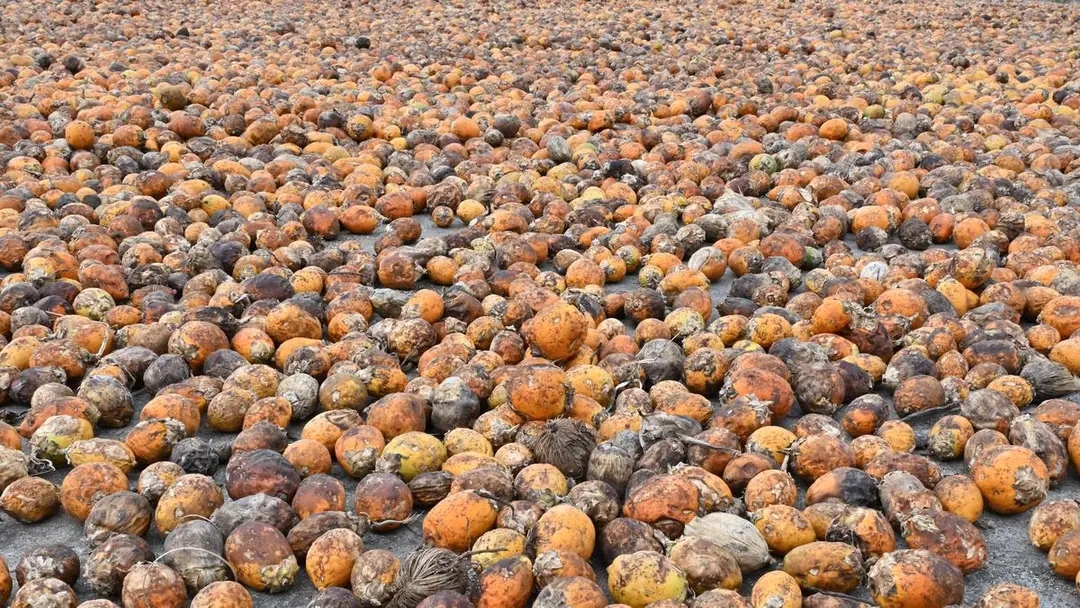
ED searches 16 places over foreign betel nut smuggling
The Enforcement Directorate has searched 16 places in connection with the smuggling of foreign-origin areca nut (betel nut) into India through the Indo-Myanmar border. The searches covered Guwahati in Assam and Siliguri, Bagdogra, Phansidewa and Cooch Behar in West Bengal, the agency said on Monday. Unaccounted cash of about ₹95 lakh was seized and fixed deposits worth nearly ₹85 lakh frozen. The probe is based on 11 FIRs registered by police in Assam and West Bengal. The ED said bank credits exceeding ₹1,000 crore were identified in accounts linked to the syndicate.
Source
Enforcement Directorate (ED) · read the original report ↗
Desk check · compared with the source
What the desk checked (5)
- ED searched 16 places in Guwahati (Assam) and Siliguri, Bagdogra, Phansidewa and Cooch Behar (West Bengal). — Attributed to the ED statement of October 5, 2026; figures appear in source.
- About ₹95 lakh unaccounted cash seized and fixed deposits of nearly ₹85 lakh frozen. — Figures stated in source and attributed to the agency.
- Probe is based on 11 FIRs registered by police in Assam and West Bengal. — Appears in source, attributed to the ED probe; FIR details not independently detailed.
- Bank credits exceeding ₹1,000 crore identified in accounts linked to the syndicate. — Direct quote attributed to the ED; unverified by any other source in the text.
- Guwahati leg managed by Bikaner Assam Roadlines India Limited, controlled by Sushil Daga. — Named allegation attributed to the ED; no response from the named party in source.
Analysts’ view opinion
This is essentially a Prevention of Money Laundering Act (PMLA) investigation layered on top of state police cases — the ED appears to be treating the 11 FIRs registered in Assam and West Bengal as the predicate offences that give it jurisdiction. The searches, cash seizure and freezing of fixed deposits are all powers the ED holds under the PMLA, but they are investigative steps, not findings of guilt. Because the allegations involve customs evasion, forged GST invoices and hawala layering, parallel action under customs, GST and foreign exchange law also remains legally open.
- The ED's jurisdiction here is derivative, not standalone — a PMLA case rests on the predicate offences in the police FIRs, and settled principle holds that if those collapse, the money-laundering case becomes difficult to sustain.
- The ₹95 lakh seizure and ₹85 lakh deposit freeze are provisional measures that must, under the PMLA scheme, be placed before an adjudicating authority within statutory timelines or lapse.
- Bank credits exceeding ₹1,000 crore are not automatically 'proceeds of crime' — the agency will have to establish how much of that turnover is traceable to the alleged offence.
- The claim that GST registrations and accounts stood in the names of local residents but were controlled from elsewhere raises a central legal question of apportioning liability between nominal proprietors and the alleged real controllers.
- Entities and individuals named in a search are not yet convicted or even necessarily charged; the presumption of innocence applies, and their response is not part of this story.
What to watch — Watch for whether the ED files a formal prosecution complaint, whether the adjudicating authority confirms the seizure and freeze, and whether the named firms move the High Court against the action.
Everything attributed here is an ED allegation at the investigation stage — the story does not establish any arrests, any charges framed, or the response of those named.
Deep dive
Research brief · 8 facts · 2 dates · exam-readyThe brief
Context
The Enforcement Directorate (ED) is investigating a large smuggling racket that allegedly brings foreign-origin areca nut (betel nut) of Indonesian, Thai and Burmese origin into India across the Indo-Myanmar border in Mizoram, and then moves it to several States disguised as Indian produce. The probe is built on 11 FIRs registered by police in Assam and West Bengal. On October 5, 2026, the ED said it had searched 16 premises in Guwahati (Assam) and Siliguri, Bagdogra, Phansidewa and Cooch Behar (West Bengal). The agency alleges forged GST invoices, e-way bills and transport documents, shell firms and hawala channels were used to legitimise and monetise the smuggled consignments.
Key facts
- ED searched 16 places - in Guwahati (Assam) and Siliguri, Bagdogra, Phansidewa and Cooch Behar (West Bengal), announced on Monday, October 5, 2026.
- Unaccounted cash of about Rs 95 lakh was seized and fixed deposits worth nearly Rs 85 lakh were frozen.
- Bank credits exceeding Rs 1,000 crore were identified in accounts connected with the syndicate, the ED said.
- The probe is based on 11 First Information Reports registered by police in Assam and West Bengal.
- Premises searched were linked to DNG Biotech Private Limited, Jai Karni Tradings Private Limited, Purvottar Agro Private Limited, N.R. Associates and connected individuals.
- Consignments of dried areca nut were allegedly ferried across the Tiau river at Zokhawthar in small lots, bypassing the Land Customs Station, opposite Champhai in Mizoram.
- ED says Champhai has no recorded areca nut production and, until recently, Mizoram had no betel nut drying or processing units.
- The Guwahati leg was allegedly managed by Bikaner Assam Roadlines India Limited and associated concerns controlled by Sushil Daga, whose premises were covered in a search on July 3.
Timeline
- July 3 (year as stated in source: not specified)ED search action covered premises of Bikaner Assam Roadlines India Limited and associated concerns controlled by Sushil Daga.
- October 5, 2026ED announces searches at 16 places in Assam and West Bengal; Rs 95 lakh cash seized, Rs 85 lakh in fixed deposits frozen.
Who has a stake
- Enforcement Directorate (ED) — Investigating the money-laundering trail, seizing cash and freezing deposits; must trace proceeds of crime exceeding Rs 1,000 crore in bank credits.
- Assam and West Bengal police — Registered the 11 FIRs that form the predicate basis for the ED probe.
- Companies and individuals named — DNG Biotech, Jai Karni Tradings, Purvottar Agro, N.R. Associates, Bikaner Assam Roadlines and Sushil Daga face searches and allegations.
- Residents of Champhai, Mizoram — Proprietorship firms were allegedly registered in their names, with GST registrations and bank accounts funded and operated by controllers in Silchar.
- Gutka and pan masala manufacturers — Allegedly bought the smuggled betel nut at a fraction of the duty-paid price.
- Domestic areca nut growers and the exchequer — Face undercutting by duty-evaded imports and loss of customs and GST revenue (implicit in alleged duty evasion).
- Transporters in the Siliguri corridor — Allegedly paid monthly protection money in exchange for tokens and code words for unhindered passage.
Why it matters
The case shows how a border-smuggling route can be fused with GST document fraud, shell firms and hawala to move goods worth hundreds of crores across multiple States while appearing legitimate. Beyond revenue loss, duty-evaded areca nut undercuts domestic growers and feeds the gutka and pan masala trade. The scale - over Rs 1,000 crore in identified bank credits - points to an organised syndicate rather than petty cross-border trade.
UPSC angle
Prelims pointers
- Areca nut (betel nut) of Indonesian, Thai and Burmese origin allegedly entered India via Myanmar into Mizoram.
- Tiau river at Zokhawthar, opposite Champhai in Mizoram, is the alleged crossing point; Land Customs Station was bypassed.
- Route alleged: Zokhawthar/Champhai to Silchar via Vairengte, then Guwahati, then the Siliguri corridor into north Bengal and other States.
- Destination States named: West Bengal, Bihar, Uttar Pradesh, Maharashtra and others.
- ED probe based on 11 FIRs by Assam and West Bengal police; searches at 16 premises on October 5, 2026.
- Instruments of concealment alleged: forged GST invoices, e-way bills, transport documents, shell firms and hawala channels.
Mains framing
The ED's areca nut case illustrates the convergence of three vulnerabilities: a porous riverine stretch of the Indo-Myanmar border where consignments can be ferried in small lots around a Land Customs Station; a documentation system - GST registrations, invoices and e-way bills - that can be gamed by proprietorship firms registered in the names of local residents but controlled remotely, in this case allegedly from Silchar; and a financial layer where proceeds pass through accounts of relatives, employees and shell entities before cash withdrawals routed through hawala and investment in property and vehicles. The ED's own evidentiary anchor is telling: Champhai has no recorded areca nut production and Mizoram until recently had no drying or processing units, yet "Indian-origin" consignments originated there - a mismatch that data-based profiling of GST registrations against local productive capacity could flag early. Equally revealing is the allegation of monthly protection money with tokens and code words along the Siliguri corridor, which points to enforcement capture rather than mere evasion. A way forward consistent with the facts stated would combine route-level surveillance at identified crossing and transit points, cross-verification of e-way bill trails against physical capacity and production data, swift action on firms that are closed and replaced once scrutinised, and parallel money-laundering action to attach the proceeds of crime so that the economics of the racket break down.
Key terms
- Enforcement Directorate (ED)
- Central agency probing money laundering and foreign exchange offences; here acting on FIRs filed by State police.
- Areca nut (betel nut)
- Dried nut used in gutka and pan masala; foreign-origin consignments allegedly smuggled in to avoid duty.
- Land Customs Station
- Designated land border point for lawful customs clearance of goods; allegedly bypassed via small-lot river crossings.
- E-way bill
- GST-mandated electronic document for movement of goods; allegedly forged to show smuggled nut as Indian produce.
- Shell firm
- A company existing mainly on paper, used here to show fictitious sales and then closed and replaced when scrutinised.
- Hawala
- Informal, unregulated money transfer channel allegedly used to route large cash withdrawals back along the supply chain.
Practice questions
- Cross-border smuggling today is less a customs problem than a documentation and financial-trail problem. Examine with reference to the areca nut smuggling case probed by the ED.
- Discuss how GST instruments such as invoices and e-way bills can be misused by shell entities, and suggest verification mechanisms to detect mismatches between declared trade and local productive capacity.
- The Indo-Myanmar border presents distinctive enforcement challenges. Analyse, and outline measures to strengthen interdiction without disrupting legitimate local trade.
Grounded only in the source report — figures and dates are the source's, not inferred.