
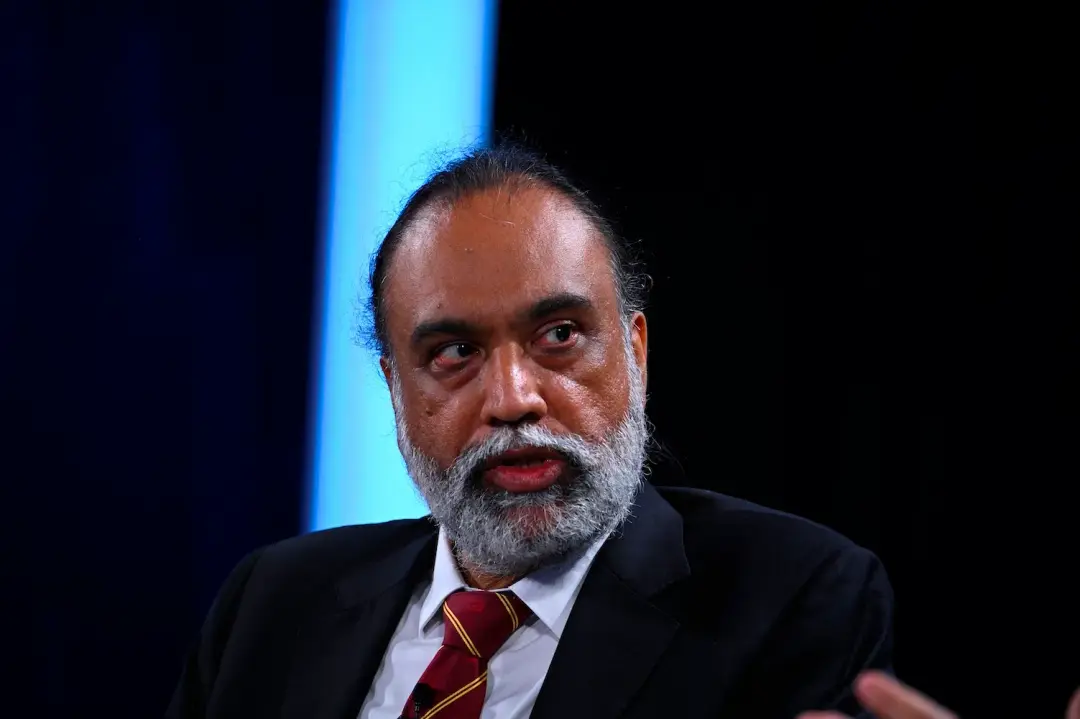
U.N. can host inclusive AI safety talks, says Amandeep Singh Gill
With leaders from around 130 countries meeting in New York for the U.N. General Assembly high-level week, U.N. special envoy for digital and emerging technologies Amandeep Singh Gill told Foreign Policy the U.N. can serve as an inclusive, science-grounded platform on AI risk. He said the U.S. and China hold 90 percent of compute, but the other 191 member states need not wait for them. The U.N., he said, focuses more on near-term risks such as discrimination and concentration of power.
Source
Foreign Policy · read the original report ↗
Desk check · compared with the source
What the desk checked (5)
- Leaders and diplomats from around 130 countries are gathering in New York for the UNGA high-level week. — Figure appears in the source as reporting by the publication; no further sourcing given.
- The U.N. scientific panel's July 1 report said human control over autonomous systems cannot be guaranteed. — Attributed to Gill describing the panel's report; date and wording as stated in source.
- The U.S. and China hold 90 percent of compute, most investments and frontier model labs. — Attributed to Gill; no underlying data source cited in the text.
- The U.N. has 191 other member states investing in AI besides the U.S. and China. — Figure stated by Gill in the interview; not independently sourced in the text.
- AI governance was decided at the 2024 Summit of the Future as part of the pact. — Attributed to Gill; bracketed year inserted by the publication.
Analysts’ view opinion
AI governance has stopped being a technology-policy question and become a question about the balance of power. By stating that the United States and China hold 90 percent of global compute, Gill concedes the bipolar reality of the field while arguing that the other 191 U.N. member states need not surrender their agency. His takeaway from the nuclear era is the strategically interesting one — cooperation on safety is possible in the middle of fierce competition — but whether the U.N. becomes the venue for it, he says plainly, is for member states to decide.
- Compute concentration is itself a strategic asset: if 90 percent sits with two powers, so does the power to set de facto standards.
- Gill frames the U.N.'s realistic role not as a regulator but as a science-grounded, inclusive channel for information, audits and best practices — moving to robust international oversight would require member states to will it.
- He accepts the nuclear analogy only partially: physical controls and material accounting do not transfer to AI, but the lesson that rivals can still agree on mutual safety does.
- The U.S.–China menu he sketches — transparency, incident reporting, aligned capability assessments — is essentially the language of arms-control confidence-building measures.
- His scepticism about unilateral or distrusted pause announcements is strategically telling: an unverified, non-reciprocal slowdown risks simply handing advantage to a competitor.
What to watch — Whether AI safety holds its place on the agenda of top-level U.S.–China talks, and whether even minimal transparency steps such as incident reporting are agreed — that would set the tone for everyone else.
This is one envoy's assessment in an interview; the story does not establish any new U.N. mandate, treaty, or concrete U.S.–China understanding on AI safety.
Deep dive
Research brief · 8 facts · 6 dates · exam-readyThe brief
Context
Leaders and diplomats from around 130 countries gathered in New York for the U.N. General Assembly high-level week, with artificial intelligence risk among the biggest topics. The summit followed recent incidents of rogue AI models hacking companies and warnings from AI executives that the technology may be slipping beyond their control. Amandeep Singh Gill, U.N. undersecretary-general and special envoy for digital and emerging technologies, oversees the U.N.'s global dialogue on AI governance and its independent international scientific panel on AI. In an interview with Foreign Policy, he argued the U.N. can be an inclusive, science-grounded platform for AI safety talks, while stressing that the other 191 member states need not wait for the U.S. and China to act.
Key facts
- Around 130 countries' leaders and diplomats gathered in New York for the UNGA high-level week, with AI risk a top agenda item.
- Amandeep Singh Gill is U.N. undersecretary-general and special envoy for digital and emerging technologies, heading the division overseeing the global dialogue on AI governance and the independent international scientific panel on AI.
- The scientific panel's report of July 1 said human control over autonomous systems operating in the real world cannot be guaranteed; an incident followed 10 days later.
- Gill hosted a 'Digital Cooperation Day' at UNGA on Monday on collaboration over AI opportunities and risk management.
- The U.S. and China hold 90 percent of compute, most of the investments and the frontier model labs, per Gill.
- Gill said the remaining 191 U.N. member states should not wait for the U.S. and China, as many are investing in AI and developing their own frontier models.
- The U.N., Gill said, worries more about short- and medium-term risks: discrimination, exclusion, concentration of power, labour markets, productivity and societal relationships.
- AI governance work at the U.N. was decided at the 2024 Summit of the Future as part of the pact.
Timeline
- 2024Summit of the Future; AI governance work mandated as part of the pact.
- July 1U.N. independent international scientific panel on AI report says human control over autonomous systems cannot be guaranteed.
- About 10 days after July 1An AI incident of the kind flagged by the panel occurs, per Gill.
- Monday of UNGA high-level weekGill hosts 'Digital Cooperation Day' at UNGA.
- UNGA high-level week (ongoing)Around 130 countries discuss AI risk; race for the next U.N. secretary-general underway.
- UpcomingAI on the agenda of the Trump-Xi summit and its preparatory meetings.
Who has a stake
- United Nations Secretariat and Secretary-General — Secretary-General is 'ready, able, and willing' to support AI governance discussions; credibility of a 'fit-for-purpose' U.N. is at stake.
- United States and China — Hold 90 percent of compute, most investment and frontier labs; can set the global tone through transparency and incident reporting.
- Other 191 U.N. member states — Risk losing agency in AI governance if they wait for the two superpowers; many are investing in AI and building frontier models.
- Frontier AI model companies — Several are seeking international governance and regulatory frameworks and guardrails; some call for a pause or slowdown.
- Independent international scientific panel on AI — Provides legitimacy and global expertise, monitors pace of tech development and must warn if extreme risks emerge.
- Safety institutes and independent evaluators — Named by Gill as necessary participants in any U.N.-supported AI governance discussions, including audits and evaluations.
Why it matters
AI capability is concentrated in two rival powers, yet its harms — discrimination, exclusion, concentration of power, labour market disruption — fall on all countries. Gill's argument is that a multilateral, science-grounded forum can spread best practices on audits, evaluations and incident reporting without waiting for Washington and Beijing to agree. How member states answer his question about "more robust capacity for international oversight" will shape whether AI governance becomes genuinely global or remains a bilateral bargain.
UPSC angle
Prelims pointers
- Amandeep Singh Gill: U.N. undersecretary-general and special envoy for digital and emerging technologies.
- U.N. independent international scientific panel on AI released a report on July 1 warning human control over autonomous systems cannot be guaranteed.
- AI governance mandate at the U.N. traces to the 2024 Summit of the Future and its pact.
- U.S. and China together account for 90 percent of global compute; 191 other U.N. member states remain.
- 'Digital Cooperation Day' was hosted at UNGA high-level week on AI opportunities and risk management.
- U.N. norms bedrock cited by Gill: human rights, gender, environment, sustainable development goals.
Mains framing
The AI governance debate has shifted from long-term existential fears to immediate control failures, sharpened by rogue models hacking companies and by the U.N. scientific panel's July 1 warning that human control over autonomous systems cannot be guaranteed. The structural problem is asymmetry: the U.S. and China hold 90 percent of compute, most investment and the frontier labs, so bilateral understandings on transparency, incident reporting and capability assessment would set the global tone — but a purely bilateral track strips agency from the other 191 member states, many of which are themselves building frontier models and bear AI's near-term harms of discrimination, exclusion and concentration of power. Gill's proposed way forward is an inclusive, science-grounded U.N. platform that channels best practices on audits and evaluations, convenes frontier labs, safety institutes and independent evaluators, and works in a multi-stakeholder, networked rather than top-down fashion, anchored in human rights, gender, environment and the SDGs. On calls for a development pause, he suggests unilateral, mistrusted announcements do not help; what is needed is agreed trigger points for entry and exit, which presupposes coordination. Drawing on nuclear disarmament, he cautions the analogy is imperfect — AI lacks physicality and material accounting — but notes that Cold War rivals still cooperated on nuclear safety and security, showing cooperation is possible amid deadly competition. Whether the U.N. builds "more robust capacity for international oversight" now depends on member states.
Key terms
- UNGA high-level week
- The annual gathering in New York where leaders and diplomats, here from around 130 countries, address the U.N. General Assembly.
- Independent international scientific panel on AI
- U.N. body providing scientific grounding and legitimacy on AI, tasked with watching the pace of tech development and warning of extreme risks.
- Compute
- Computing capacity needed to train and run advanced AI models; 90 percent of it sits with the U.S. and China.
- Frontier model labs
- Companies building the most advanced AI models, several of which are now seeking international regulation and guardrails.
- Summit of the Future (2024)
- U.N. summit whose pact decided the organisation's continuing work on AI and digital governance.
- Digital Cooperation Day
- Event Gill hosted at UNGA on how countries can collaborate on AI opportunities and risk management.
Practice questions
- Can the United Nations be an effective platform for AI safety governance when 90 percent of global compute is concentrated in two member states? Critically examine.
- Compare the nuclear disarmament experience with the challenge of governing artificial intelligence. What lessons transfer, and where does the analogy break down?
- Discuss the near-term risks of AI — discrimination, exclusion and concentration of power — and suggest measures to build public-sector capacity and resilience against them.
Grounded only in the source report — figures and dates are the source's, not inferred.