
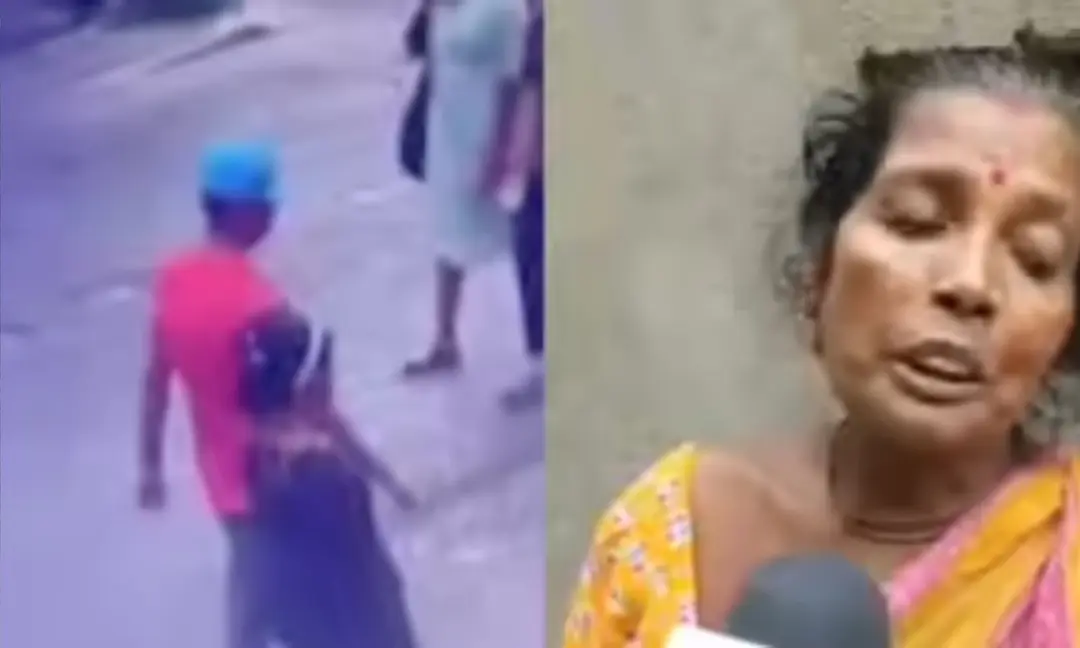
Baruipur case: mother refuses to accept accused's body
The mother of Prabhash Mandal, the main accused in the Baruipur rape and murder case in West Bengal, told the media on Wednesday she would not accept his body, saying he had received the punishment his actions deserved. Police said Mandal snatched an officer's weapon and fired at a team during a crime-scene reconstruction and died in return fire. A 12-year-old girl missing since July 4 was found dead in a pond at Suryapur Hat the next day.
Source
Tirupati — నేరాలు · read the original report ↗
Desk check · some claims need care
What the desk checked (5)
- Prabhash Mandal, main accused in the Baruipur rape-murder case, died in a police encounter during a crime-scene reconstruction. — Attributed to police and the Baruipur SP in the source; no independent confirmation given.
- Mandal snatched an officer's weapon and fired at the police team, who returned fire. — Police version quoted in the source; no eyewitness or judicial corroboration mentioned.
- The accused's mother said she would not accept her son's body and that he deserved his punishment. — Direct quotes to media reported in source; speaker not named.
- A 12-year-old girl who went missing on July 4 was found dead in a pond in the Suryapur Hat area the next day. — Dates and details appear in the source, attributed to police allegations.
- Locals blocked the Baruipur-Jayanagar road, burnt tyres and damaged police vehicles. — Stated in source without named official attribution.
Analysts’ view opinion
A mother refusing to claim her son's body is a powerful human moment, but legally it settles nothing. When a person in police custody dies in police firing — even where police describe it as an encounter — Indian practice requires a defined set of steps: an independent inquiry, a magisterial examination and a post-mortem. The accused's death also ends the prosecution against him on the rape and murder charges, which means the girl's family can no longer obtain justice in the form of a court verdict; the case would continue only against any other accused.
- Where a death results from police firing, the burden falls on the investigating machinery to establish whether the force used was lawful self-defence or excessive — the police account is a claim to be tested, not an established finding.
- The account that the accused snatched an officer's weapon during a crime-scene reconstruction naturally raises questions about whether standard procedures on custodial safety and weapon handling were followed.
- Even if relatives decline the body, the state retains the duty to conduct a post-mortem, preserve evidence and arrange lawful last rites — a family's refusal does not suspend legal process.
- The accused's death does not legally establish his guilt; under Indian law a person remains an accused, not a convict, until a court rules.
- Local anger expressed through road blockades, tyre-burning and damage to police vehicles could itself attract separate criminal proceedings; public outrage, however understandable, cannot substitute for the process that determines punishment.
What to watch — Watch four things: the post-mortem findings, whether a magisterial inquiry is ordered, any intervention by human rights bodies, and the official decision on who takes custody of the body.
The story carries only the police version of how Mandal died; it does not establish independent corroboration, post-mortem findings, whether a magisterial inquiry has begun, or whether other accused are involved.
Deep dive
Research brief · 8 facts · 6 dates · exam-readyThe brief
Context
A 12-year-old girl who went missing on July 4 in the Baruipur area of West Bengal was found dead in a pond at Suryapur Hat the next day; police allege she was raped and killed and her body dumped in a sack. The main accused, Prabhash Mandal, died after what police describe as an encounter during a crime-scene reconstruction, in which they say he snatched an officer's weapon and fired at the police team. On Wednesday his mother told the media she would not accept or bring home his body, saying he had got the punishment his deeds deserved. The case had earlier triggered violent local protests, including a road blockade and damage to police vehicles.
Key facts
- The main accused in the Baruipur rape and murder case is named as Prabhash Mandal.
- His mother said on Wednesday she would not take his body or bring it home, saying he had suffered the punishment his actions deserved.
- She said two policemen came to her house to inform her of her son's death and asked if she wanted to go to the hospital; she said she could not as her husband was unwell.
- Police said Mandal snatched a weapon from an officer and tried to fire at the police team during the reconstruction of the crime.
- The Baruipur SP said police fired in return, a bullet hit Prabhash, and he was declared dead at the hospital.
- Police said Mandal had been misleading investigating officers and was not cooperating with the probe.
- The 12-year-old girl went missing on July 4; her body was found the next day in a pond in the Suryapur Hat area.
- Police allege the girl was raped and murdered and her body dumped in a sack.
Timeline
- July 4The 12-year-old girl goes missing.
- July 5 (the next day)Her body is found in a pond in the Suryapur Hat area; police allege rape and murder, body dumped in a sack.
- After the body was found (date not stated in the source)Locals block the Baruipur-Jaynagar road, burn tyres and damage police vehicles demanding arrest and punishment.
- During the investigation (date not stated in the source)Prabhash Mandal dies after police open fire during a crime-scene reconstruction; declared dead at hospital.
- WednesdayMandal's mother tells the media she will not accept her son's body.
- 8 July 2026, 12:30 PM ISTThe report is published.
Who has a stake
- Family of the 12-year-old victim — Loss of a child in an alleged rape and murder; seeking justice in a case where the main accused is now dead.
- Prabhash Mandal's mother and family — Refusing to claim the body; father reported unwell, leaving the disposal of the body to authorities.
- West Bengal Police / Baruipur SP — Must justify the death in custody-like circumstances during a reconstruction and complete the probe despite the accused's death.
- Local residents of Baruipur — Public anger over child safety and policing; their protest included road blockade and damage to police vehicles.
- Judicial process — With the main accused dead, the trial route to establishing guilt and punishment is foreclosed.
Why it matters
The case combines two fraught issues: the rape and murder of a 12-year-old, and the death of the main accused in police firing while in custody for a crime-scene reconstruction. Such deaths short-circuit the trial process that alone can establish guilt, and they often follow intense public demand for instant retribution, as seen in the Baruipur road blockade. The mother's refusal to accept the body shows how deeply social stigma and public anger can penetrate even the accused's own family.
UPSC angle
Prelims pointers
- Baruipur, in West Bengal, is the site of the alleged rape and murder of a 12-year-old girl reported in July.
- The girl went missing on July 4 and her body was recovered the next day from a pond at Suryapur Hat.
- Main accused: Prabhash Mandal, who died after police firing during a crime-scene reconstruction.
- Police version: the accused snatched an officer's weapon and fired at the police team; he was hit in return fire and declared dead in hospital.
- Protesters blocked the Baruipur-Jaynagar road, burnt tyres and damaged police vehicles.
- Report published 8 July 2026.
Mains framing
The Baruipur case illustrates the collision between public outrage over sexual violence against children and the procedural safeguards that criminal justice depends on. Police say the accused was uncooperative and misleading during the probe, snatched a service weapon during a crime-scene reconstruction and was shot in return fire — an account that, by its nature, is furnished by the same force that fired. Whatever the truth, the death removes the possibility of a trial verdict, denying the victim's family judicial closure and leaving allegations untested; it also occurs against a backdrop of street protests demanding immediate arrest and severe punishment, a climate in which extra-judicial outcomes can be popularly applauded. The mother's public refusal to accept her son's body signals the social cost borne by families of the accused. The way forward, on the material available, lies in transparent, independent scrutiny of every death occurring in police custody or police action, strict adherence to procedure during reconstructions and escorting of accused persons, speedy and sensitive investigation of child sexual offences so that anger does not spill into rioting, and completing the probe into the girl's death regardless of the accused's death so that the record is established.
Key terms
- Crime-scene reconstruction
- Investigative exercise in which the accused is taken to the spot to re-enact and explain the sequence of the crime; the setting of the firing here.
- Encounter
- Term used for a death caused by police firing, here said by police to be return fire after the accused shot at them.
- SP (Superintendent of Police)
- District-level police chief; the Baruipur SP gave the official account of the firing and the accused's death.
- Suryapur Hat
- The locality where the 12-year-old girl's body was recovered from a pond a day after she went missing.
- Main accused
- The person police name as primarily responsible for the offence; here Prabhash Mandal, who died before trial.
Practice questions
- Deaths of accused persons in police firing during investigation raise questions about both accountability and public faith in the courts. Discuss with reference to safeguards available in India.
- Public outrage after crimes against children often turns into demands for instant punishment. Examine the risks this poses to due process and how the state should respond.
- What procedural precautions should govern the custody and movement of an accused during a crime-scene reconstruction? Illustrate using the Baruipur case.
Grounded only in the source report — figures and dates are the source's, not inferred.