
Gandak embankment breaches in Saran; floods hit six Bihar districts
Heavy rains in Nepal have swollen the Gandak and other rivers in north Bihar, with flood-like conditions in six districts affecting 1.59 lakh people. After embankments breached at four places in Bagaha-Bettiah, another broke in Saran on Wednesday morning, sending water into low-lying areas. A flood alert covers 17 districts. The monsoon has begun withdrawing from Uttar Pradesh, while in Unnao rising Ganga levels have left boats plying streets.
Source
Alluri Sitharama Raju — weather · read the original report ↗
Desk check · some claims need care
What the desk checked (5)
- Heavy rains in Nepal have swollen the Gandak and other rivers in north Bihar. — Stated in source without attribution to any named agency or official.
- Flood-like conditions in six Bihar districts affect 1.59 lakh people. — Figure appears in source; no source given for the estimate.
- An embankment broke in Saran on Wednesday morning after breaches at four places in Bagaha-Bettiah. — Reported in source as fact; no official statement cited.
- A flood alert has been issued in 17 districts of Bihar. — Stated in source; issuing authority not named.
- Monsoon has begun withdrawing from Uttar Pradesh, including Muzaffarnagar and Aligarh. — Internally consistent with reduced rainfall claim; no weather department attribution given.
Analysts’ view opinion
Embankment breaches in Bihar are never purely a weather story — they are a political test of administrative capacity. The report notes breaches at four points in Bagaha-Bettiah and another in Saran, 1.59 lakh people affected and alerts in 17 districts; that spread makes questions about embankment maintenance and spending a natural opposition line. Equally, it gives the governing side a chance to demonstrate competence through the speed of relief — who gains or loses will depend largely on how fast help reaches the affected.
- A breached embankment is politically different from heavy rain: it shifts the argument from nature to construction quality and upkeep.
- The story attributes the surge to rain in Nepal, which offers the state a "factors beyond our control" defence, though it does not settle the question of embankment strength.
- Alerts across 17 districts mean the impact is not confined to one or two constituencies, raising pressure on local representatives in areas such as West Champaran and Saran.
- In such episodes the political contest usually plays out through visibility — field visits, aerial surveys and relief announcements.
- Centre-state coordination and the scale of compensation announcements typically become the next flashpoint in the debate.
What to watch — Watch how quickly relief camps and compensation announcements follow, whether leaders begin touring the affected districts, and whether demands for an inquiry into embankment repair work emerge.
The story does not establish why the embankments failed, whether maintenance was deficient, or how the government and opposition have responded — the political consequences described here are inference, not reported fact.
Deep dive
Research brief · 8 facts · 4 dates · exam-readyThe brief
Context
Heavy rainfall in Nepal's catchment areas has swollen the Gandak and other rivers in north Bihar, producing flood-like conditions across six districts. Embankments have breached at four places in the Bagaha-Bettiah belt of West Champaran and, on Wednesday morning, at another point in Saran, pushing water into low-lying settlements. A flood alert now covers 17 Bihar districts. Simultaneously, the southwest monsoon has begun withdrawing from Uttar Pradesh even as the Ganga in Unnao floods villages and neighbourhoods.
Key facts
- Flood-like conditions persist in six north Bihar districts, affecting 1.59 lakh people.
- Embankments breached at four places in the Bagaha-Bettiah area; another embankment broke in Saran on Wednesday morning.
- A flood alert has been issued in 17 districts across Bihar.
- Heavy rains in Nepal are the stated cause of the Gandak and other north Bihar rivers swelling.
- The monsoon has started withdrawing from Uttar Pradesh, including parts of western UP such as Muzaffarnagar and Aligarh, reducing rainfall statewide.
- In Unnao, rising Ganga levels have flooded villages and localities, with boats being used on streets.
- In Paderu, Alluri Sitharama Raju district of Andhra Pradesh, dense fog followed rainfall and temperatures dropped; commuters drove with headlights on in the morning.
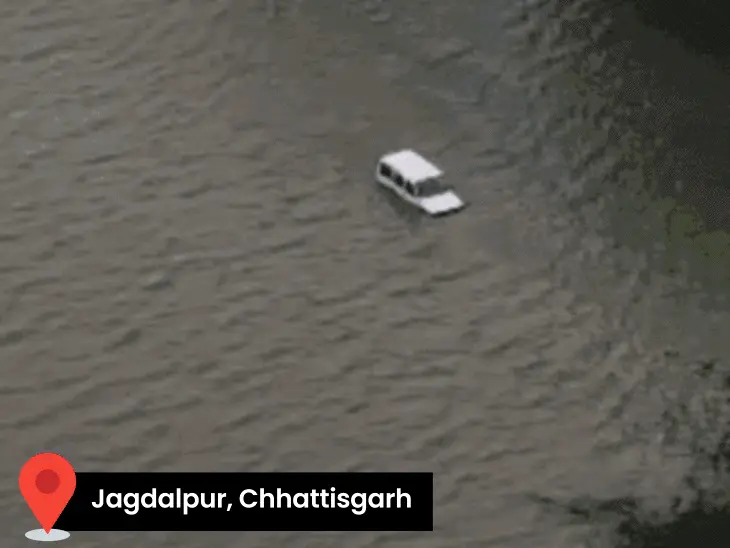
- Flooding was also reported in the Kharun river at Raipur (Chhattisgarh) and in Bithoor, Kanpur, after the Pandu river rose.
Timeline
- MondayRain in Baran city, Rajasthan.
- TuesdayBaran city remained shrouded in fog after the previous day's rain; light mist seen in Sonipat, Haryana, as the monsoon withdraws.
- Before WednesdayEmbankments breach at four places in the Bagaha-Bettiah belt; low-lying areas of Bettiah inundated after the Champaran embankment broke and people urged to move to higher ground.
- Wednesday morningAnother embankment breaches in Saran district; water rapidly enters low-lying areas.
Who has a stake
- 1.59 lakh flood-affected people in six Bihar districts — Loss of homes, crops and access as water enters low-lying areas; need for evacuation to higher ground.
- Residents of Bettiah, Bagaha and Saran — Directly exposed to embankment breaches on the Gandak and Champaran embankment inundation.
- Bihar state administration — Must manage a flood alert covering 17 districts, repair breached embankments and evacuate people.
- Residents of Unnao and Bithoor (Kanpur), Uttar Pradesh — Villages and neighbourhoods flooded by rising Ganga and Pandu river levels; boats used on streets.
- Nepal's upstream catchment — Heavy rainfall there directly drives Gandak discharge and downstream flooding in Bihar.
- People of western UP, Haryana and Rajasthan — Monsoon withdrawal is bringing reduced rainfall, mist and fog, affecting visibility and travel.
Why it matters
Embankment breaches turn a rain event upstream in Nepal into a sudden inundation of populated plains, exposing how dependent north Bihar's flood safety is on the integrity of its river embankments. With 1.59 lakh people already affected and 17 districts under alert, the incident tests early warning, evacuation and embankment maintenance at the tail end of the monsoon. The simultaneous monsoon withdrawal from UP alongside Ganga flooding in Unnao shows that receding rains do not immediately end flood risk downstream.
UPSC angle
Prelims pointers
- Gandak is a trans-boundary river; heavy rain in Nepal swells it and other north Bihar rivers.
- Six Bihar districts face flood-like conditions affecting 1.59 lakh people; flood alert in 17 districts.
- Embankment breaches: four places in Bagaha-Bettiah (West Champaran belt) and one in Saran.
- Monsoon withdrawal from UP has begun, including Muzaffarnagar and Aligarh in western UP.
- Unnao: Ganga in spate floods villages, boats plying on streets.
- Paderu is in Alluri Sitharama Raju district, Andhra Pradesh; Kharun river flows at Raipur, Chhattisgarh; Pandu river at Bithoor, Kanpur.
Mains framing
North Bihar's flood crisis illustrates the trans-boundary nature of Himalayan river hydrology: heavy rainfall in Nepal's catchment translates within hours into peak discharge on the Gandak and allied rivers, where the plains population depends almost entirely on earthen embankments for protection. The current episode — breaches at four points in the Bagaha-Bettiah belt and a fresh one in Saran on Wednesday morning, with 1.59 lakh people affected across six districts and 17 districts on alert — points to the vulnerability of embankment-centric flood control, which can concentrate risk when a structure fails and water rushes into low-lying habitations. Implications include displacement, crop damage and the need for boat-based movement, as seen in Unnao where the rising Ganga has flooded neighbourhoods even as the monsoon begins withdrawing from Uttar Pradesh. A grounded way forward, on the evidence in this story, lies in timely alerts and evacuation advisories of the kind issued in Bettiah, pre-monsoon and end-of-season inspection and strengthening of vulnerable embankment stretches, and upstream-downstream coordination on rainfall and discharge data, recognising that flood risk persists in river channels after rainfall itself declines.
Key terms
- Gandak
- A river of north Bihar fed by rains in Nepal; its swelling triggered the current flood-like conditions and embankment breaches.
- Embankment breach
- Failure of a raised earthen barrier built along a river, allowing water to rush rapidly into protected low-lying areas.
- Flood alert
- Official warning to prepare for possible inundation; currently issued for 17 districts in Bihar.
- Monsoon withdrawal
- The seasonal retreat of the southwest monsoon; it has begun from Uttar Pradesh, including Muzaffarnagar and Aligarh, reducing rainfall.
- Champaran embankment
- The embankment whose breach inundated low-lying areas of Bettiah, prompting advisories to move to higher ground.
Practice questions
- Discuss how trans-boundary rainfall in Nepal's catchment shapes flood risk in north Bihar, with reference to the recent Gandak embankment breaches.
- Embankments are the mainstay of flood management in the Ganga plains. Examine their limitations in light of the breaches at Bagaha-Bettiah and Saran.
- Why can river flooding continue even as the southwest monsoon withdraws? Illustrate with the situation in Unnao and Kanpur.
Grounded only in the source report — figures and dates are the source's, not inferred.