
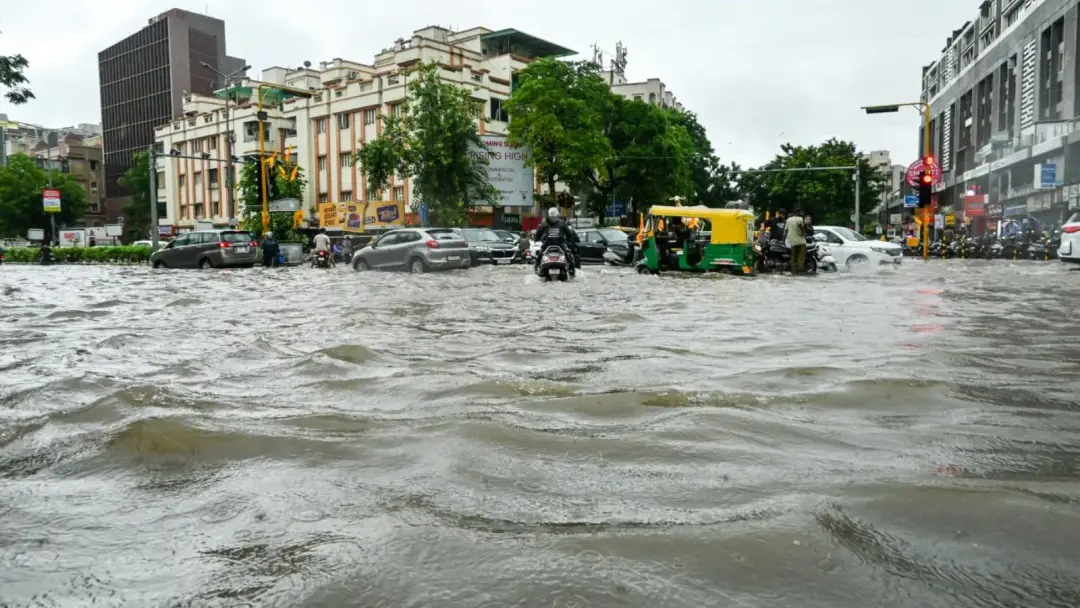
IMD forecasts heavy rain in Gujarat; red alert in three districts
The India Meteorological Department has warned of heavy to very heavy rainfall with thunderstorms and squalls in Gujarat, issuing a red alert for the Saurashtra districts of Surendranagar, Rajkot and Morbi on Monday. In Ahmedabad, three underpasses were closed due to waterlogging after rain since Sunday. Since 6 am Sunday, 33 of the state's 34 districts recorded an average of 21.84 mm rain. In Surat, the Singhanpore causeway was closed as the Tapi river rose.
Source
Indian Express — Cities · read the original report ↗
Desk check · compared with the source
What the desk checked (5)
- Red alert issued for Surendranagar, Rajkot and Morbi on Monday, with heavy to very heavy rain, thunderstorms and squalls forecast for Gujarat. — Attributed to the India Meteorological Department in the source.
- 33 of Gujarat's 34 districts received an average of 21.84 mm rain since 6 am Sunday. — Figure appears in source; attributed to weather office/state data.
- Gujarat received 729 mm average rainfall till 6 am Monday, 80.23% of the 30-year average, with an overall 17% deficit till September 14. — Figures appear in source but the deficit and percentage framing is not explained further.
- Kaprada recorded 113 mm, Valia 97 mm, Nanapondha 90 mm, Dharampur 87 mm and Barwala 86 mm in 24 hours. — Attributed to the State Emergency Operation Centre.
- Surat Municipal Corporation closed the Singhanpore causeway after the Tapi river rose. — Attributed to civic action in source; no official quoted.
Analysts’ view opinion
వర్షాలు వాతావరణ ఘటన అయినా, గుజరాత్లో నగర మౌలిక వసతుల పనితీరు ఎప్పుడూ రాజకీయ పరీక్షే. అహ్మదాబాద్లో మూడు అండర్పాస్ల మూసివేత, సింధు భవన్ వంటి ప్రధాన రహదారుల్లో నీటి నిల్వ దృశ్యాలు సోషల్ మీడియాలో వ్యాపించడం — ఇవి పాలక పక్షానికి 'డ్రైనేజీ, స్మార్ట్ సిటీ' విమర్శలకు దారి తీసే అంశాలు. అదే సమయంలో ముందస్తు రెడ్ అలర్ట్, కాజ్వే మూసివేత వంటి నిర్ణయాలను ప్రభుత్వం 'చురుకైన విపత్తు నిర్వహణ'గా చూపించే అవకాశం ఉంది. ఈ కథనంలో ఏ నేత ప్రకటనలూ లేవు కాబట్టి రాజకీయ ప్రతిస్పందన ఇంకా బహిరంగంగా మొదలైనట్టు చెప్పలేం.
- పట్టణ నీటి నిల్వ దృశ్యాలు — ప్రత్యేకించి అహ్మదాబాద్ వంటి కీలక నగరాల్లో — స్థానిక సంస్థల పాలనపై విపక్షాల ప్రశ్నలకు సహజ ఆధారం అవుతాయి.
- సురేంద్రనగర్, రాజ్కోట్, మోర్బి — సౌరాష్ట్రలోని ఈ మూడు జిల్లాలకు రెడ్ అలర్ట్ ఇవ్వడం, ఆ ప్రాంత గ్రామీణ, పరిశ్రమ ఆధారిత ఓటర్ల దృష్టిని ప్రభుత్వ స్పందనపై కేంద్రీకరిస్తుంది.
- 34 జిల్లాల్లో 33 జిల్లాలకు వర్షం విస్తరించడం అంటే సహాయ చర్యలు, పంట నష్టం సర్వేలు రాష్ట్రవ్యాప్త రాజకీయ అంశంగా మారే అవకాశం.
- రాష్ట్రవ్యాప్తంగా 17 శాతం లోటు, దేవభూమి ద్వారకాలో 88 శాతం లోటు ఉండటం — ఒకే సీజన్లో వరద, కరవు రెండు రకాల డిమాండ్లను ప్రభుత్వం ఎదుర్కోవాల్సి రావచ్చు.
- ముందస్తు హెచ్చరికలు, కాజ్వే మూసివేత వంటి చర్యలు ప్రాణనష్టం తగ్గించగలిగితే అది పాలక పక్షానికి రాజకీయంగా కలిసివచ్చే అంశం.
What to watch — వర్షాలు తగ్గిన తర్వాత నష్ట అంచనా, పరిహారం ప్రకటనలు ఎంత వేగంగా వస్తాయో, మరోవైపు విపక్షాలు పట్టణ డ్రైనేజీ వైఫల్యాలను ప్రధాన అస్త్రంగా మార్చుకుంటాయో గమనించాలి.
ఈ కథనం ప్రాణనష్టం, పంట నష్టం అంచనాలు, లేదా ఏ పార్టీ నేతల స్పందనలను నిర్ధారించలేదు — కాబట్టి రాజకీయ ప్రభావం ఎంత ఉంటుందో ఇప్పుడే తేల్చి చెప్పలేం.
Deep dive
Research brief · 8 facts · 8 dates · exam-readyThe brief
Context
Gujarat is in the closing phase of the southwest monsoon and a fresh spell of intense rain has hit both south Gujarat and Saurashtra. The India Meteorological Department (IMD) has warned of heavy to very heavy rainfall with thunderstorms and squalls across the state, and placed Surendranagar, Rajkot and Morbi under a red alert on Monday. Urban flooding forced the closure of at least three underpasses in Ahmedabad, while in Surat the rising Tapi river led to the closure of the Singhanpore causeway. Despite the downpour, the state's seasonal rainfall was still 17 per cent in deficit till September 14, with wide district-level variation.
Key facts
- IMD issued a red alert for the Saurashtra districts of Surendranagar, Rajkot and Morbi on Monday, warning of heavy to very heavy rain with thunderstorms and squalls.
- At least three underpasses in Ahmedabad were closed due to waterlogging; the Mithakhali-Ashram Road underpass shut at 10:28 am and the Akhbarnagar underpass on the 132-feet Ring Road around 12:50 pm.
- Since 6 am on Sunday, 33 of Gujarat's 34 districts received an average of 21.84 mm rainfall, with Valsad, Bharuch and Botad among the highest.
- Till 6 am on Monday, Gujarat had received an average of 729 mm rainfall, 80.23 per cent of its 30-year average.
- Devbhoomi Dwarka was the only district with an 88 per cent rain deficit; Valsad recorded 46 per cent above-normal rain; the state was 17 per cent deficient till September 14.
- Top talukas in the last 24 hours: Kaprada 113 mm, Valia 97 mm, Nanapondha 90 mm, Dharampur 87 mm and Barwala 86 mm.
- Surat Municipal Corporation closed the Singhanpore causeway connecting to Rander after Tapi river water began flowing over it.
- Till 2 pm Monday, Surat received an average of 50 mm rain (highest Olpad taluka 26 mm); Valsad averaged 22 mm (highest Pardi 31 mm).
Timeline
- 6 am, SundayRainfall recording period begins; 33 of 34 Gujarat districts go on to log an average of 21.84 mm.
- Sunday (through the day and night)Heavy rain lashes Ahmedabad, causing waterlogging in several areas.
- Till 6 am, MondayState's average seasonal rainfall stands at 729 mm, 80.23 per cent of the 30-year average.
- 6 am to 10 am, MondayHeavy rain in Borsad and Tarapur (Anand), Godhra (Panchmahals), Dholka (Ahmedabad) and Gandevi (Navsari).
- 10:28 am, MondayUnderpass connecting Mithakhali crossroads with Ashram Road in Ahmedabad shut.
- Around 12:50 pm, MondayAkhbarnagar underpass on the 132-feet Ring Road, connecting to the airport, closed.
- Till 2 pm, MondaySurat records an average of 50 mm rain; Singhanpore causeway closed as Tapi water flows over it.
- September 14Overall state rainfall shows a 17 per cent deficit; ANI posts visuals of severe waterlogging on Sindhu Bhavan road, Ahmedabad.
Who has a stake
- India Meteorological Department (IMD) — Issues rainfall warnings and colour-coded alerts; accuracy and lead time of its red alert shapes district-level preparedness.
- Residents and commuters of Ahmedabad — Face waterlogged roads and closed underpasses; cars and two-wheelers were shown stuck on inundated roads.
- Surat Municipal Corporation — Had to close the Singhanpore causeway to Rander as the Tapi river rose, managing flood risk in the city.
- Surendranagar, Rajkot and Morbi districts — Under red alert for heavy to very heavy rain with thunderstorms and squalls, requiring emergency readiness.
- State Emergency Operation Centre (SEOC), Gujarat — Compiles and disseminates taluka-wise rainfall data used for disaster response decisions.
- Devbhoomi Dwarka district — Facing an 88 per cent rain deficit even as other districts flood, with implications for water supply and farming.
Why it matters
The episode shows how the same monsoon can produce urban flooding in Ahmedabad and Surat while leaving a coastal district like Devbhoomi Dwarka 88 per cent rain-deficient, underlining how uneven rainfall distribution complicates both flood and drought management. Closure of underpasses and a river causeway points to the vulnerability of civic infrastructure to short, intense spells. With the state still 17 per cent below normal till September 14, late-season rain matters for water storage and the kharif harvest even as it disrupts city life.
UPSC angle
Prelims pointers
- IMD's red alert is the highest-level warning category used here, issued for Surendranagar, Rajkot and Morbi (Saurashtra).
- Gujarat's average rainfall till 6 am Monday: 729 mm, i.e. 80.23 per cent of the 30-year average; overall deficit 17 per cent till September 14.
- Tapi river flows through Surat; the Singhanpore causeway connects Surat to Rander.
- Valsad district (south Gujarat) recorded 46 per cent above-normal rain; Kaprada, Nana Pondha and Dharampur are Valsad talukas.
- Devbhoomi Dwarka, a coastal district, was the only one with an 88 per cent rain deficit.
- Taluka-wise rainfall data in Gujarat is released by the State Emergency Operation Centre (SEOC).
Mains framing
The Gujarat rain spell illustrates two linked governance challenges: managing short, high-intensity rainfall in dense urban areas, and coping with sharply uneven spatial distribution within a single monsoon season. In Ahmedabad, waterlogging shut at least three underpasses, including those on the Ashram Road and 132-feet Ring Road corridors, indicating that low-lying grade-separated infrastructure and drainage capacity are the weakest links; in Surat, a rising Tapi forced the closure of the Singhanpore causeway, a reminder that riverine flood risk and urban expansion overlap. At the same time, the state averaged only 729 mm (80.23 per cent of the 30-year average) with a 17 per cent overall deficit till September 14, while Valsad was 46 per cent above normal and Devbhoomi Dwarka 88 per cent deficient - a pattern that makes uniform state-level water planning inadequate. The way forward, on the evidence in the source, lies in acting on IMD's colour-coded alerts and SEOC taluka-level data for pre-positioned traffic and drainage response, treating underpasses and causeways as designated closure points during red alerts, and using district-level rainfall departures rather than state averages to guide water storage and agricultural advisories.
Key terms
- Red alert
- IMD's highest warning level in this advisory, signalling heavy to very heavy rain requiring authorities to take action.
- Squall
- A sudden, sharp increase in wind speed, often with thunderstorms, flagged by IMD in its Gujarat warning.
- State Emergency Operation Centre (SEOC)
- Gujarat's nodal disaster coordination body, which released the taluka-wise rainfall figures cited in the report.
- Causeway
- A low road crossing over a river bed, such as Singhanpore in Surat, closed when water flows over it.
- Rain deficit / departure from normal
- Percentage shortfall or excess of actual rainfall against the long-period average - Devbhoomi Dwarka minus 88 per cent, Valsad plus 46 per cent.
- Saurashtra
- The peninsular region of Gujarat that includes Surendranagar, Rajkot, Morbi and Botad districts.
Practice questions
- Explain how IMD's colour-coded warning system works and evaluate its usefulness for urban flood management, using the September 2026 Gujarat rain episode as an example.
- Gujarat recorded a 17 per cent overall rain deficit even as districts like Valsad were 46 per cent above normal. Discuss the implications of such intra-state rainfall variability for water and agricultural planning.
- Urban flooding in Indian cities is as much a civic infrastructure failure as a meteorological event. Critically examine with reference to the closure of underpasses in Ahmedabad and the Tapi causeway in Surat.
Grounded only in the source report — figures and dates are the source's, not inferred.