
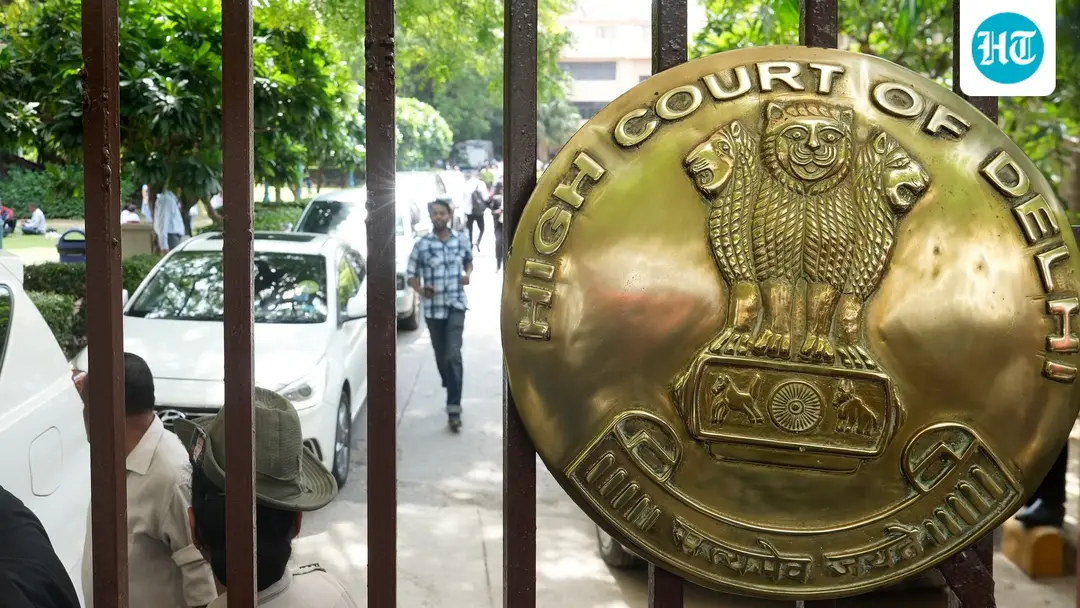
Delhi HC refuses plea for FIR against ex-judge Yashwant Varma
The Delhi High Court on Monday refused to entertain a plea seeking registration of an FIR and a probe by an SIT or CBI into the purported discovery of a huge stash of cash after a fire at the residence of former Delhi High Court judge Yashwant Varma. Terming it a "wild witch hunt", Justice Amit Bansal said petitioner and lawyer Ghanshyam Upadhyay had alternative remedies in law. The petitioner withdrew the plea. The Supreme Court dismissed his earlier plea in August.
Source
Hindustan Times — India · read the original report ↗
Desk check · compared with the source
What the desk checked (5)
- Justice Amit Bansal called the petition a 'wild witch hunt' and refused to entertain it. — Quote attributed to the judge in the source; carried as reported.
- Petitioner, lawyer Ghanshyam Upadhyay, withdrew the plea after the court indicated it would be dismissed. — Stated in source as courtroom proceeding; no independent documentation cited.
- Cash was purportedly found after a fire at Varma's Lutyens' Delhi residence around 11:35 pm on March 14, 2025. — Source describes the discovery as 'purported'; time and date appear in source without attribution to an official record.
- Varma resigned on April 9 in a letter to President Droupadi Murmu, rendering Lok Sabha removal proceedings infructuous. — Figure and dates appear in source; no document or official cited.
- An earlier plea by the petitioner was dismissed by the Supreme Court in August. — Asserted in source without case details or citation.
Analysts’ view opinion
The core political signal here is that the judiciary is keeping control of how this matter is handled. With the Lok Sabha removal process already rendered infructuous by the resignation, the Delhi High Court has now blocked an attempt to keep the issue alive through a criminal probe — and in unusually blunt language, calling it a "wild witch hunt". After the Supreme Court in August and the High Court now, the petitioner's legal room has narrowed, but the political conversation around judicial accountability has not closed.
- A removal process ending as infructuous because of a resignation leaves a lingering perception of accountability left incomplete — politically useful material for critics at any point.
- The court's focus on locus standi and on why the trial court was bypassed suggests it stood on procedure rather than merits, so this is not a verdict on the allegations themselves.
- The case is likely to remain a reference point in parliamentary debate on judicial accountability and appointments.
- Both government and opposition have reason to tread carefully, since any appearance of attacking the judiciary can rebound politically.
- By withdrawing rather than being dismissed, the petitioner avoided an adverse order and preserved the option of pursuing remedies elsewhere.
What to watch — Watch whether the petitioner moves the trial court or other available remedies, and whether judicial accountability resurfaces as a parliamentary talking point.
The story does not establish whether the allegations are true or false — only that one plea was not entertained — and it records no reaction from any political party.
Deep dive
Research brief · 8 facts · 6 dates · exam-readyThe brief
Context
A fire at the Lutyens' Delhi residence of then Delhi High Court judge Yashwant Varma on the night of Holi, March 14, 2025, led to the purported discovery of a large stash of cash, triggering a major controversy. Varma was transferred back to his parent court, the Allahabad High Court, and faced rare removal (impeachment) proceedings initiated by the Lok Sabha, with a Lok Sabha probe panel finding him guilty in the cash-at-home case. He resigned on April 9, sending his resignation letter to President Droupadi Murmu, which rendered the removal proceedings infructuous. Lawyer Ghanshyam Upadhyay's plea seeking an FIR and an SIT or CBI probe was refused by the Delhi High Court, which called it a "wild witch hunt".
Key facts
- Justice Amit Bansal of the Delhi High Court refused on Monday to entertain the plea seeking an FIR and an SIT or CBI probe into the purported cash discovery.
- The judge termed the petition a "wild witch hunt" and said: "I'm not entertaining this. This is a wild witch hunt. You have nothing better to do?"
- The court questioned the petitioner's locus and asked why he had not approached the trial court for registration of an FIR.
- Petitioner and lawyer Ghanshyam Upadhyay withdrew the plea after the court indicated it would dismiss it.
- Upadhyay's earlier plea on the same matter was dismissed by the Supreme Court in August.
- The fire broke out at Varma's Lutyens' Delhi residence around 11:35 pm on the night of Holi, March 14, 2025, and fire department personnel doused the flames.
- After the cash controversy, Varma was transferred to the Allahabad High Court, his parent high court.
- Varma resigned on April 9 this year in a letter to President Droupadi Murmu; he was due to superannuate on January 5, 2031.
Timeline
- March 14, 2025, around 11:35 pm (night of Holi)Fire breaks out at then Delhi HC judge Yashwant Varma's Lutyens' Delhi residence; fire personnel rush to douse it, and a huge stash of cash is purportedly discovered.
- After the cash discoveryVarma is transferred to the Allahabad High Court, his parent high court; controversy escalates.
- Not stated in the source (date)Lok Sabha probe panel finds Justice Yashwant Varma guilty in the cash-at-home case; removal proceedings initiated by the Lok Sabha.
- AugustSupreme Court dismisses Ghanshyam Upadhyay's earlier plea in the matter.
- April 9 (this year)Varma resigns in a letter to President Droupadi Murmu, rendering the Lok Sabha removal proceedings "infructuous".
- Monday (as reported)Delhi High Court refuses to entertain Upadhyay's plea for an FIR and SIT/CBI probe; petitioner withdraws it.
Who has a stake
- Yashwant Varma, former Delhi High Court judge — Faced the cash-at-home controversy, transfer to Allahabad HC and removal proceedings; resigned on April 9 before superannuation due January 5, 2031.
- Justice Amit Bansal, Delhi High Court — Heard and refused to entertain the plea, calling it a "wild witch hunt" and pointing to alternative remedies in law.
- Ghanshyam Upadhyay, petitioner and lawyer — Sought FIR and SIT/CBI probe; his locus was questioned, his Supreme Court plea was dismissed in August and he withdrew the High Court plea.
- Lok Sabha — Initiated rare removal proceedings and its probe panel found Varma guilty; the proceedings became infructuous after his resignation.
- President Droupadi Murmu — Recipient of Varma's resignation letter, the constitutional authority in the judge's exit.
- CBI and proposed SIT — Were the investigating agencies sought by the petitioner for a probe into the purported cash discovery.
- Judiciary and public at large — Institutional credibility and the question of how allegations against sitting judges are investigated.
Why it matters
The case tests how criminal law can be set in motion against a former judge and where such a plea must first be filed, with the High Court stressing alternative remedies and questioning the petitioner's locus. It also shows how a judge's resignation can render rare parliamentary removal proceedings infructuous, leaving the underlying allegations without a formal probe outcome in the source's account.
UPSC angle
Prelims pointers
- Fire at Justice Yashwant Varma's Lutyens' Delhi residence: March 14, 2025 (Holi night), around 11:35 pm.
- Varma was transferred from Delhi High Court to Allahabad High Court, his parent high court.
- Lok Sabha initiated rare removal proceedings; its probe panel found Varma guilty in the cash-at-home case.
- Varma resigned on April 9, in a letter to President Droupadi Murmu; removal proceedings became infructuous.
- Varma's scheduled superannuation date: January 5, 2031.
- Delhi HC Justice Amit Bansal refused the FIR/SIT/CBI plea by lawyer Ghanshyam Upadhyay, calling it a "wild witch hunt"; an earlier plea was dismissed by the Supreme Court in August.
Mains framing
The episode raises three connected questions of accountability. First, procedure: the petitioner argued that criminal law can be set in motion by anyone and that there is \"no embargo\", while the Delhi High Court questioned his locus and asked why he had not first moved the trial court for an FIR, refusing to entertain the plea and pointing to alternative remedies; the petitioner then withdrew it, having already had a similar plea dismissed by the Supreme Court in August. Second, institutional accountability: the purported discovery of a huge stash of cash after the March 14, 2025 fire led to Varma's transfer to his parent Allahabad High Court, a Lok Sabha probe panel finding him guilty and rare removal proceedings, all of which were rendered infructuous by his April 9 resignation years before his January 5, 2031 superannuation. Third, the gap that follows: with removal proceedings closed by resignation and courts declining a writ-stage FIR direction, the source shows the remedy shifting to ordinary criminal-law channels such as the trial court. The way forward, on the record available, lies in using the statutory remedies the High Court referred to, rather than petitions the court described as a \"wild witch hunt\".
Key terms
- FIR (First Information Report)
- The first recorded complaint that starts a police investigation into a cognisable offence; the petitioner sought its registration here.
- SIT (Special Investigation Team)
- A dedicated team sought by the petitioner, alongside the CBI, to probe the purported cash discovery.
- CBI
- The central investigating agency the petitioner wanted to probe the cash-at-home matter.
- Locus (locus standi)
- A petitioner's legal standing to bring a case; the Delhi High Court questioned the petitioner's locus.
- Removal (impeachment) proceedings
- Rare parliamentary process to remove a judge; initiated by the Lok Sabha against Varma and rendered infructuous by his resignation.
- Infructuous
- Rendered pointless or without effect, as the Lok Sabha proceedings became after Varma resigned on April 9.
Practice questions
- Discuss the mechanisms available for holding higher-judiciary judges accountable in India, in light of the Lok Sabha removal proceedings against Justice Yashwant Varma being rendered infructuous by his resignation.
- "Criminal law can be set into motion by anyone." Examine this claim against the Delhi High Court's insistence on locus and on approaching the trial court first for an FIR.
- Should allegations of misconduct against a judge be investigated by an SIT or CBI, or handled through in-house and parliamentary processes? Argue with reference to the cash-at-home case.
Grounded only in the source report — figures and dates are the source's, not inferred.