
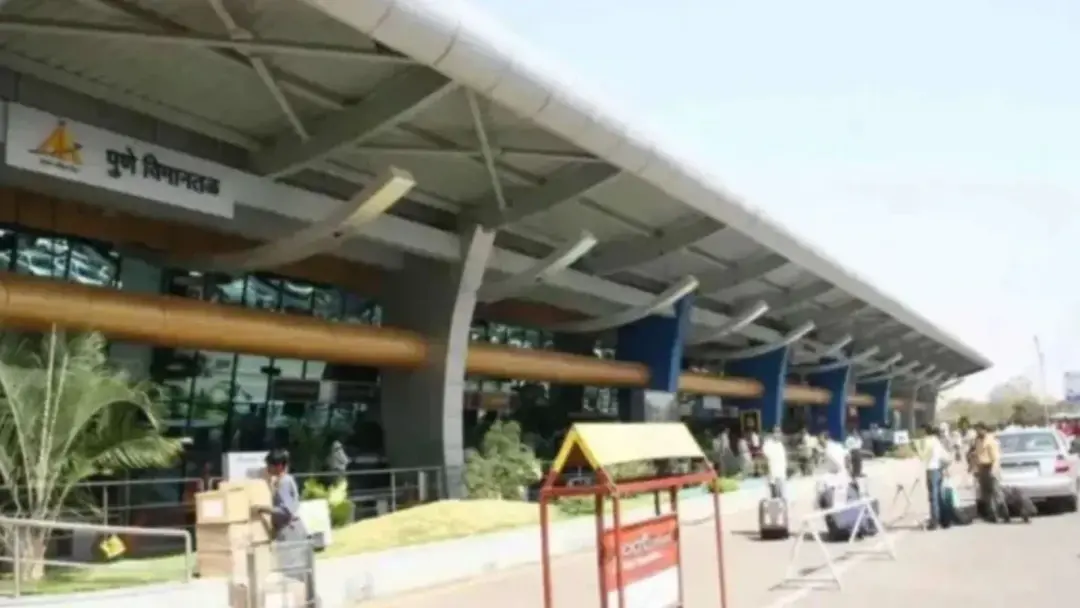
Land transfer for Pune airport expansion in progress: Director
The transfer of a 13-acre Indian Air Force land parcel needed for Pune airport's expansion is progressing, Airport Director Santosh Dhoke said at a media briefing on Wednesday. He said the Defence Estate Officer appoints a Board of Officers before clearance, and a master plan would follow the handover. A decision on the hub-and-spoke model rests with the Union Home Ministry. Three new nine-seater golf carts were added for passenger transit, taking the total to eight.
Source
Indian Express — Cities · read the original report ↗
Desk check · compared with the source
What the desk checked (5)
- Transfer of a 13-acre Indian Air Force land parcel for Pune airport expansion is in progress. — Attributed to Airport Director Santosh Dhoke at a media briefing; figure appears in source.
- Defence Estate Officer appoints a Board of Officers before land handover, after which a master plan will be prepared. — Direct quote from Dhoke; no independent confirmation in source.
- Decision on the hub-and-spoke model rests with the Union Ministry of Home Affairs; a multi-stakeholder team visited in July. — Attributed to Dhoke; source gives no document or ministry statement.
- Three new nine-seater golf carts added, taking the total to eight, plus three 35-seater buses. — Figures quoted directly by Dhoke and internally consistent (3 existing + 3 new + 2 AeroMall = 8).
- SpiceJet flight delays are not caused by issues at Pune Airport. — Claim by airport director only; airline response not included in source.
Analysts’ view opinion
The Pune airport expansion story is not really about 13 acres — it is about jurisdiction. With the Air Force, the Defence Estate Officer, a Board of Officers and the Union Home Ministry each holding a piece of the decision, local representatives can promise outcomes but cannot deliver deadlines. That is why the airport director's language stays deliberately careful — "process is progressing", "hopeful soon" — administrative phrasing that blames no one and commits to nothing.
- Because the land transfer depends on coordination between central agencies, no single office can be clearly held responsible for the delay — a politically comfortable arrangement for everyone involved.
- Saying the master plan will follow the land handover creates a further layer in which no one owns the expansion timeline.
- Placing the hub-and-spoke decision with the Union Home Ministry shifts a popular local demand for international connectivity to the central level.
- Small, visible improvements such as extra golf carts and the reopening of the renovated old terminal serve as pressure valves for public frustration while the bigger project waits.
- Deflecting responsibility for SpiceJet delays to the airline and the stray dog issue to the municipal corporation reflects the familiar diffusion of accountability among civic bodies.
What to watch — Watch for when the Defence Estate Officer actually appoints the Board of Officers and whether the Home Ministry moves on the hub-and-spoke proposal — those two steps will set the project's political tempo.
The story does not establish why the transfer has been delayed, how any leader or party has responded, or any timeline for completion — it is only a status update from the airport director.
Deep dive
Research brief · 8 facts · 2 dates · exam-readyThe brief
Context
Pune's civil airport operates from a shared facility on an Indian Air Force base at Lohegaon, which limits how far the Airports Authority of India can expand it. Expansion depends on the transfer of a 13-acre IAF land parcel, a process pending for years because it involves the Air Force, the Defence Estate Officer and a Board of Officers. At a media briefing on Wednesday, Airport Director Santosh Dhoke gave updates on the land transfer, a proposed hub-and-spoke model for international travel, the renovated old terminal, passenger transit facilities, flight delays and stray dogs on the premises.
Key facts
- The land needed for Pune airport's expansion is a 13-acre parcel belonging to the Indian Air Force, Director Santosh Dhoke said.
- New offices have already been built to replace those that fell on the land parcel and were to be demolished.
- Besides the Indian Air Force, the Defence Estate Officer (DEO) is involved; the DEO appoints a Board of Officers (BOO) before clearing the land handover.
- A master plan for the airport would be prepared only after the land handover is completed.
- A multi-stakeholder team visited Pune in July for a preliminary assessment of the hub-and-spoke model; the further decision rests with the Union Ministry of Home Affairs as customs and immigration are involved.
- The reopening of the renovated old terminal building is with the Bureau of Civil Aviation Security (BCAS) in Mumbai and will next go to Delhi.
- Three new nine-seater golf carts were added to an existing fleet of three, plus two run by the AeroMall, taking the total to eight; three 35-seater buses also run the arrival terminal-AeroMall route.
- On SpiceJet flight delays, Dhoke said the disruptions were not due to any issue at Pune Airport and were beyond the airport's control.
Timeline
- JulyA multi-stakeholder team visited Pune Airport for a preliminary assessment of the proposed hub-and-spoke model.
- Wednesday (date not stated in the source)Airport Director Santosh Dhoke briefs the media on the land transfer, hub-and-spoke model, old terminal reopening, golf carts, SpiceJet delays and stray dogs.
Who has a stake
- Airports Authority of India / Pune Airport administration — Needs the 13-acre transfer to prepare a master plan and expand the airport; has restricted dog entry on the airside.
- Indian Air Force — Owns the 13-acre land parcel and shares the Pune base; has restricted dog entry on the airside along with AAI.
- Defence Estate Officer (DEO) — Must clear the handover and appoints a Board of Officers before giving a go-ahead.
- Union Ministry of Home Affairs — Holds the decision on the hub-and-spoke model as it involves customs and immigration agencies.
- Bureau of Civil Aviation Security (BCAS) — Clearance from its Mumbai office, then Delhi, is needed before the renovated old terminal reopens.
- Pune Municipal Corporation (PMC) — Coordinates with the airport on removing stray dogs in line with the Supreme Court verdict; residents keep leaving dogs on the city side.
- Air passengers at Pune — Stand to gain from expansion, easier arrival terminal-AeroMall transit and, under hub-and-spoke, international formalities at Pune itself.
Why it matters
Pune is a major industrial and IT centre whose airport capacity is constrained by land, so a 13-acre defence transfer determines whether expansion and a master plan can proceed at all. The proposed hub-and-spoke model would let Pune passengers clear immigration, customs and baggage at home before a domestic connection to an international hub, effectively giving the city international-style convenience without a full international terminal. The case also shows how civil aviation growth in India is routinely gated by defence land procedures and multi-agency clearances.
UPSC angle
Prelims pointers
- Pune Airport expansion hinges on transfer of a 13-acre Indian Air Force land parcel.
- Defence Estate Officer (DEO) appoints a Board of Officers (BOO) before approving defence land handover.
- Decision on Pune's hub-and-spoke model rests with the Union Ministry of Home Affairs, as customs and immigration are involved.
- Bureau of Civil Aviation Security (BCAS) clearance is required for reopening the renovated old terminal.
- Airport golf cart fleet now totals eight nine-seater carts; three 35-seater buses also serve the arrival terminal-AeroMall route.
- Stray dog management at the airport is being handled with PMC in line with the Supreme Court verdict.
Mains framing
Pune Airport illustrates the structural bottlenecks of India's civil aviation expansion at defence-shared airfields: growth is contingent not on demand or investment but on the transfer of a 13-acre Indian Air Force parcel, which requires the Indian Air Force, the Defence Estate Officer and a Board of Officers appointed by the DEO to align, with the airport master plan itself deferred until handover. A second layer of dependence is regulatory and inter-ministerial — the hub-and-spoke model, which would let passengers complete immigration, customs clearance and baggage check-in at Pune before a domestic connecting flight to an international hub, awaits the Union Home Ministry because multiple agencies including customs and immigration are involved, even after a multi-stakeholder team's July assessment; similarly the renovated old terminal awaits BCAS clearance in Mumbai and then Delhi. Meanwhile the airport manages user-experience issues within its control — adding golf carts to take the fleet to eight for arrival terminal-AeroMall transit — while disclaiming responsibility for airline-side delays such as SpiceJet's, and coordinating with the PMC on stray dogs in line with the Supreme Court verdict, complicated by residents abandoning dogs on the city side. The way forward suggested by the source is completing the land handover so a master plan can be drawn up, and securing a Home Ministry decision on the hub-and-spoke proposal.
Key terms
- Defence Estate Officer (DEO)
- Authority handling defence land matters whose go-ahead is needed for the Pune land transfer.
- Board of Officers (BOO)
- Panel appointed by the DEO to process and clear a defence land handover.
- Hub-and-spoke model
- Arrangement letting Pune passengers finish international immigration, customs and baggage check-in at Pune before a domestic flight to an international hub.
- Bureau of Civil Aviation Security (BCAS)
- Civil aviation security regulator; its Mumbai and then Delhi clearance is pending for the old terminal's reopening.
- AeroMall
- Facility linked to the airport's arrival terminal, served by golf carts and 35-seater buses.
- Pune Municipal Corporation (PMC)
- City civic body coordinating with the airport on stray dog removal per the Supreme Court verdict.
Practice questions
- Defence land transfers frequently delay civil airport expansion in India. Examine the procedural steps involved and suggest measures to speed up such handovers, using the Pune Airport case.
- What is the hub-and-spoke model proposed for Pune Airport, and why does its approval rest with the Union Ministry of Home Affairs rather than the aviation authorities?
- Discuss how multi-agency clearances (defence, BCAS, customs, immigration, municipal bodies) shape the pace of airport modernisation, with reference to recent developments at Pune Airport.
Grounded only in the source report — figures and dates are the source's, not inferred.