
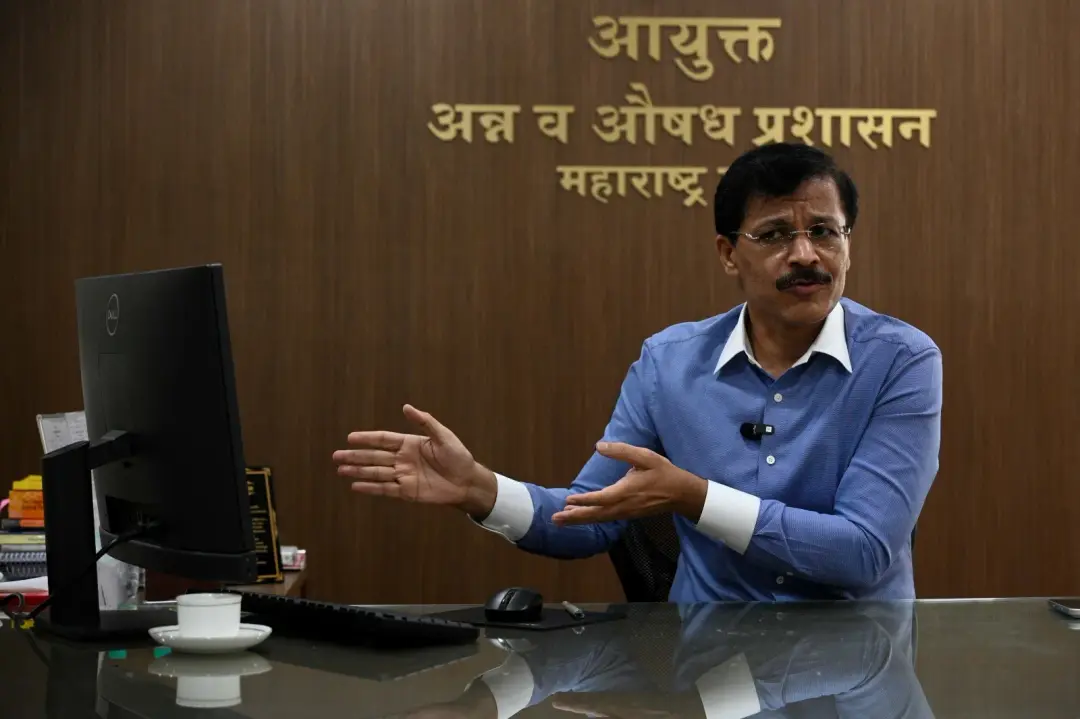
FDA suspends two Pune restaurant licences, seizes food worth Rs 1.18 crore
The Food and Drug Administration has suspended the licences of Rangla Punjab in Sutarwadi, Pashan, and Manisha Dosa Center in Tathawade, Pimpri-Chinchwad, as part of a crackdown on food hygiene and safety violations. In Pune, the drive led to four FIRs, six arrests and the seizure of banned and misbranded food worth Rs 1.18 crore. A business was sealed and two vehicles worth Rs 23 lakh seized. Commissioner Tukaram Mundhe said action was taken against 18 establishments statewide.
Source
Indian Express — Cities · read the original report ↗
Desk check · compared with the source
What the desk checked (5)
- FDA suspended licences of Rangla Punjab (Sutarwadi, Pashan) and Manisha Dosa Center (Tathawade, Pimpri-Chinchwad). — Attributed to the FDA; establishment names and locations appear in source.
- Crackdown in Pune led to four FIRs, six arrests and seizure of banned and misbranded food worth Rs 1.18 crore. — Figures appear in source, based on an FDA statement issued Tuesday.
- Officials sealed a business and seized two vehicles worth Rs 23 lakh in Pune. — Figure appears in source, attributed to officials; no further detail given.
- Action taken against six establishments in Sangli, Pune and Kolhapur, and 18 establishments statewide across five divisions. — Attributed to the FDA statement; source does not clarify overlap between the two counts.
- Complaints can be made on toll-free number 1800222365 or the Food and Drug Grievance Portal. — Attributed to FDA officials; number appears in source.
Analysts’ view opinion
This is enforcement-led food safety policy in its classic form: a festive-season inspection drive designed to generate deterrence through licence suspensions, FIRs, arrests and seizures. Such campaigns deliver visibility and short-term compliance pressure, but they do not address the structural gap — continuous, routine surveillance of food businesses. Action against 18 establishments statewide, set against the sheer number of food businesses in Maharashtra, points to targeted sampling rather than systemic coverage.
- In design terms this is campaign-style enforcement timed to peak demand during the festive period, a pattern state FDAs have used for years under the national food safety framework.
- The primary beneficiaries are consumers, but the compliance burden tends to fall hardest on small and informal food operators with the least documentation and capacity.
- Headline figures — Rs 1.18 crore of seized products, Rs 23 lakh of impounded vehicles — signal intensity, yet the story does not break down whether violations were substandard quality, adulteration or mislabelling, which matters for proportionate accountability.
- Implementation hinges on two constraints: inspector and laboratory testing capacity, and whether FIRs survive judicial scrutiny; a suspension's real bite depends on the conditions set for reinstatement.
- Foregrounding the toll-free number and grievance portal is the right move towards citizen-sourced surveillance, but its credibility rests on visible turnaround on complaints, which is not specified.
What to watch — Watch whether inspections continue after the festive season ends, what conditions are attached to restoring suspended licences, and how the four FIRs fare in court — those will determine whether this is deterrence or a seasonal spike.
The story does not establish the precise nature of the alleged violations, the establishments' response, whether the licence action is temporary or permanent, or how outcomes compare with earlier drives.
Deep dive
Research brief · 8 facts · 2 dates · exam-readyThe brief
Context
Maharashtra's Food and Drug Administration (FDA) ran a special inspection and enforcement drive across the state ahead of and during the festive season, targeting food hygiene and safety violations. In Pune, the drive resulted in the suspension of licences of two eateries — Rangla Punjab in Sutarwadi, Pashan, and Manisha Dosa Center in Tathawade, Pimpri-Chinchwad — along with FIRs, arrests and large seizures. FDA Commissioner Tukaram Mundhe said strict action would continue against businesses endangering consumers' health.
Key facts
- FDA suspended the licences of Rangla Punjab (Sutarwadi, Pashan) and Manisha Dosa Center (Tathawade, Pimpri-Chinchwad).
- The Pune crackdown led to four FIRs and six arrests.
- Banned and misbranded food products worth Rs 1.18 crore were seized in Pune.
- One business was sealed and two vehicles worth Rs 23 lakh were seized in Pune.
- Action was taken against six establishments in Sangli, Pune and Kolhapur under the Pune division.
- Statewide, action was taken against 18 establishments across Brihanmumbai, Pune, Nashik, Chhatrapati Sambhajinagar and Nagpur divisions.
- Seizures were made on suspicion of substandard quality, adulteration, mislabelling and unsafe conditions.
- Consumers can complain via the toll-free number 1800222365 or the Food and Drug Grievance Portal.
Timeline
- Festive season (date not stated in the source)FDA launches a special inspection and enforcement drive across Maharashtra.
- Tuesday (exact date not stated in the source)FDA issues a statement detailing action against 18 establishments statewide and six in the Pune division.
Who has a stake
- Food and Drug Administration (FDA), Maharashtra — Enforcement agency conducting inspections, suspending licences, filing FIRs and seizing suspect food products.
- FDA Commissioner Tukaram Mundhe — Said strict action would be taken and would continue against businesses risking consumers' health.
- Rangla Punjab and Manisha Dosa Center — Licences suspended; business operations halted over hygiene and safety violations.
- Food business operators across Maharashtra — 18 establishments faced action; risk of sealing, seizure of goods and vehicles, and criminal cases.
- Consumers in Pune and Maharashtra — Health risk from adulterated, expired, misbranded or unhygienically prepared food; can complain on 1800222365.
Why it matters
Festive-season demand raises the risk of adulterated, expired and misbranded food reaching consumers, making enforcement a direct public-health issue rather than a licensing formality. The scale of the Pune action — Rs 1.18 crore of seized food, four FIRs, six arrests and two suspended licences — shows how routine eateries can become sources of foodborne risk. It also signals that grievance channels like the FDA toll-free number place part of the surveillance burden on citizens.
UPSC angle
Prelims pointers
- Food and Drug Administration (FDA) is the state-level regulator enforcing food safety norms in Maharashtra.
- Tukaram Mundhe is the FDA Commissioner quoted in the statement.
- Pune seizures: banned and misbranded food worth Rs 1.18 crore; two vehicles worth Rs 23 lakh.
- Action taken against 18 establishments across five divisions: Brihanmumbai, Pune, Nashik, Chhatrapati Sambhajinagar, Nagpur.
- FDA food complaint toll-free number: 1800222365; complaints also via Food and Drug Grievance Portal.
- Grounds for seizure cited: substandard quality, adulteration, mislabelling, unsafe conditions.
Mains framing
Food safety enforcement in India is largely reactive and campaign-driven, as the Maharashtra FDA's festive-season drive illustrates: inspections intensify at moments of peak demand, yielding licence suspensions of two Pune eateries, four FIRs, six arrests and Rs 1.18 crore of banned and misbranded food seized, with action against 18 establishments across five divisions. The causes lie in a large, fragmented and often informal food-service sector, weak self-compliance on hygiene, and incentives to sell expired, adulterated or mislabelled stock during festivals. Implications are direct public-health harm from foodborne illness, erosion of consumer trust, and reputational and livelihood costs for compliant businesses. The way forward, on the evidence in the source, involves sustained rather than seasonal inspection — the Commissioner said action would continue against those selling or storing expired or adulterated food or cooking in unhygienic conditions — combined with visible deterrence through FIRs, sealing and licence suspension, and citizen-driven surveillance via the toll-free helpline 1800222365 and the Food and Drug Grievance Portal. Any wider regulatory or statutory prescription is not stated in the source.
Key terms
- FDA (Food and Drug Administration)
- State regulatory department in Maharashtra that inspects food businesses and enforces hygiene and safety norms.
- Licence suspension
- Regulatory action halting a food business's legal permission to operate after violations are found.
- Misbranded food
- Food sold with false, misleading or incorrect labelling about its nature or contents.
- Adulteration
- Addition or substitution of substances that lowers food quality or makes it unsafe to consume.
- Food and Drug Grievance Portal
- Official channel where consumers can lodge complaints about food quality or malpractice.
Practice questions
- Seasonal enforcement drives can generate headline seizures but rarely change compliance behaviour. Examine, with reference to the Maharashtra FDA's festive-season action, how food safety enforcement can be made continuous and preventive.
- Discuss the role of citizen grievance mechanisms, such as toll-free helplines and online portals, in strengthening food safety surveillance in India.
- What legal and administrative actions can a state food regulator take against establishments selling adulterated or misbranded food? Illustrate using the Pune crackdown.
Grounded only in the source report — figures and dates are the source's, not inferred.