
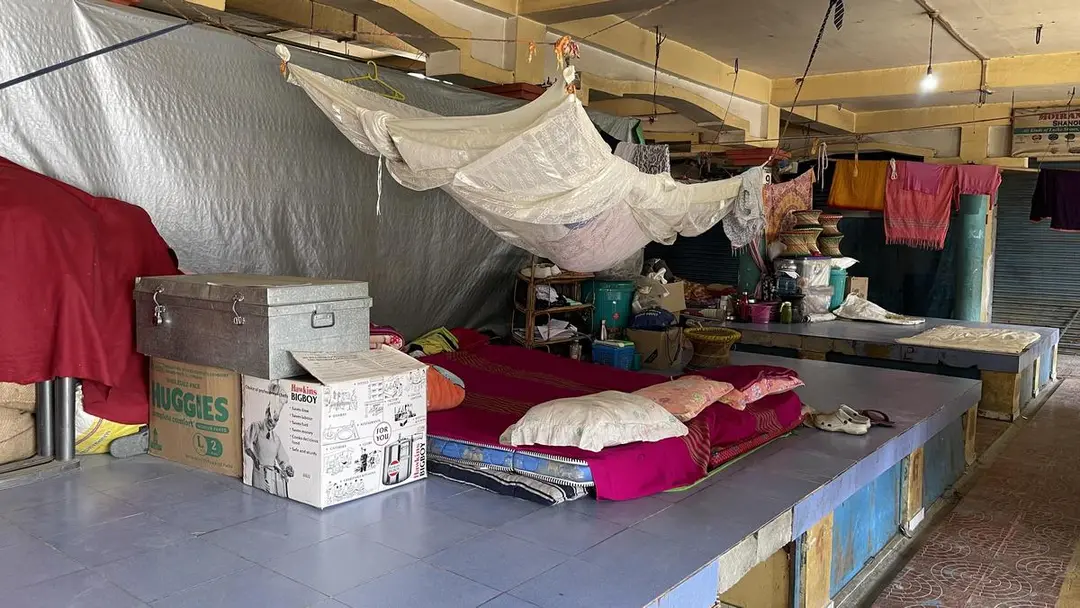
Supreme Court seeks Manipur report on 25 unnatural deaths in camps
The Supreme Court on Thursday directed the Manipur Chief Secretary to submit a detailed report on 25 unnatural deaths, including an alleged sexual assault, among internally displaced persons in relief camps. The Bench led by Chief Justice Surya Kant said the report must include post-mortem details and action taken. A report cited 640 deaths in camps across eight districts, with post-mortems in only 20 cases and compensation of ₹20,000 to ₹30,000.
Source
Manipur — CM & govt · read the original report ↗
Desk check · compared with the source
What the desk checked (5)
- Supreme Court on September 17, 2026 ordered the Manipur Chief Secretary to report on 25 unnatural deaths, including an alleged sexual assault, in relief camps. — Attributed to court order reported in source; figure appears in source.
- 640 deaths occurred in relief camps across eight districts, with post-mortems allegedly conducted in only 20 cases. — Source attributes this to a report placed before the court and uses 'allegedly'; figures appear in source.
- Compensation of only ₹20,000 to ₹30,000 was given in these cases. — Stated in source as a matter on which the court sought explanation; no independent verification possible.
- 42 SITs across eight districts are investigating 3,020 cases; 302 chargesheets, 1,583 closure reports, 1,135 under investigation, trials begun in 33. — Attributed to status report by former Maharashtra DGP Dattatray Padsalgikar taken on record by the court.
- CBI is probing 31 cases with 28 chargesheets, six closure reports; 978 witnesses, six examined, 38 arrested. — Attributed to the same status report on record; figures appear in source.
Analysts’ view opinion
The Supreme Court's sharp observations are likely to become a political burden for Manipur's administration. The order signals that relief, rehabilitation and basic rule-of-law questions from the 2023 ethnic violence remain unresolved — which raises questions not only for the State government but also for the Centre's role. With court monitoring continuing, this is an issue that could give the opposition a recurring line of attack.
- The claim that post-mortems were conducted in only 20 of 640 relief-camp deaths is easily framed as administrative failure, weakening the government's political defence.
- The Chief Justice's warning directed at the Chief Secretary shifts the accountability spotlight onto the bureaucracy rather than the political leadership.
- The State's explanation that the delay followed the appointment of a new Chief Secretary reads as a procedural defence, not a politically persuasive one.
- The court's questioning of compensation of only ₹20,000–₹30,000 could fuel demands for a higher, more uniform relief package, adding fiscal and political pressure.
- Figures of 302 chargesheets and 1,583 closure reports out of 3,020 cases can be cited by rival community groups alike as proof that justice has not been delivered.
What to watch — Watch how quickly the Chief Secretary's report is filed, how the court responds to its adequacy, and whether the suggestion for two CBI courts is acted upon by the Centre and the State.
The story does not establish the causes of these deaths or fix responsibility on any individual or government — these are allegations and reports before the court, and it offers nothing on how the politics will actually play out.
Deep dive
Research brief · 8 facts · 3 dates · exam-readyThe brief
Context
Ethnic violence that broke out in Manipur in 2023 displaced thousands of people who continue to live in relief camps across the State. The Supreme Court has been monitoring relief and rehabilitation through a committee headed by Justice Gita Mittal, and the criminal investigations through former Maharashtra DGP Dattatray Padsalgikar. On September 17, 2026, a Bench led by Chief Justice of India Surya Kant pulled up the State government for unsatisfactory responses on 25 unnatural deaths, including one involving an alleged sexual assault, among internally displaced persons in camps.
Key facts
- On September 17, 2026, the Supreme Court ordered the Manipur Chief Secretary to file a detailed report on 25 unnatural deaths, including an alleged sexual assault, among displaced persons in relief camps.
- CJI Surya Kant said the State had not given satisfactory responses to the Supreme Court-appointed Justice Gita Mittal Committee monitoring relief and rehabilitation for victims of the 2023 ethnic violence.
- A report cited before the court said 640 deaths occurred in relief camps across eight districts, with post-mortems allegedly conducted in only 20 cases.
- Compensation of only ₹20,000 to ₹30,000 was given in those cases; the court sought an explanation.
- The court directed the State Legal Services Authority to intervene to ensure FIRs are registered in all cases of unnatural deaths.
- Status report by former Maharashtra DGP Dattatray Padsalgikar: 42 SITs across eight districts probing 3,020 cases; chargesheets in 302, closure reports in 1,583, and 1,135 cases still under investigation; trials began in 33 cases.
- CBI was investigating 31 cases: chargesheets in 28, closure reports in six, three under investigation.
- Of 978 witnesses, only six had been examined; 38 people were arrested; the court suggested setting up two CBI courts to share the caseload.
Timeline
- 2023Ethnic violence in Manipur displaces people, who are housed in relief camps; Supreme Court sets up monitoring mechanisms.
- A few days before September 17, 2026A new Chief Secretary was appointed in Manipur, which State counsel cited as a possible reason for the delay in responses.
- September 17, 2026Supreme Court orders Chief Secretary's comprehensive report with post-mortem details; takes Padsalgikar status report on record; suggests two CBI courts.
Who has a stake
- Internally displaced persons in Manipur relief camps — Safety, dignity, medical care, access to daily facilities, and justice for 640 deaths reported in camps.
- Manipur Chief Secretary and State government — Must file a comprehensive action-taken report with post-mortem details; faced judicial warning 'not to invite any problem'.
- Supreme Court Bench led by CJI Surya Kant — Overseeing relief, rehabilitation and criminal accountability in Manipur violence cases.
- Justice Gita Mittal Committee — Court-appointed body monitoring relief and rehabilitation; did not receive satisfactory State responses.
- Dattatray Padsalgikar, former Maharashtra DGP — Court-appointed monitor of criminal probe and prosecution; filed the status report on SITs and CBI cases.
- CBI and State Legal Services Authority — CBI probing 31 cases; Legal Services Authority told to intervene to register FIRs in all unnatural death cases.
- Additional Solicitor General Aishwarya Bhati and State Advocate General — Representing Manipur; assured the court they would convey its concern and the sensitivity of the matter.
Why it matters
The figures point to a possible accountability gap in relief camps: 640 deaths, but post-mortems in just 20 cases and compensation as low as ₹20,000. With only six of 978 witnesses examined and closure reports filed in 1,583 of 3,020 cases, the pace of prosecution raises questions about justice for victims of the 2023 violence. The Court's direction to register FIRs in all unnatural deaths tests whether institutional oversight can translate into concrete relief for the displaced.
UPSC angle
Prelims pointers
- Justice Gita Mittal Committee: Supreme Court-appointed body monitoring relief and rehabilitation of Manipur ethnic violence victims (2023).
- Dattatray Padsalgikar, former Maharashtra DGP, monitors criminal probe and prosecution in Manipur violence cases for the Supreme Court.
- 42 Special Investigation Teams constituted across eight Manipur districts to probe 3,020 cases.
- Report cited 640 deaths in Manipur relief camps across eight districts; post-mortems in only 20 cases.
- Compensation in those cases was ₹20,000 to ₹30,000; Supreme Court sought explanation.
- Supreme Court suggested setting up two CBI courts to share the caseload of Manipur cases.
Mains framing
The Supreme Court's September 17, 2026 order on Manipur exposes how post-conflict relief can fail on two fronts simultaneously: humanitarian protection and criminal accountability. The reported 640 deaths in camps across eight districts with post-mortems in only 20 cases, compensation limited to ₹20,000–₹30,000, and an alleged sexual assault among 25 unnatural deaths suggest weak documentation and investigation of deaths among internally displaced persons, compounded, as State counsel submitted, by administrative churn such as a recent Chief Secretary change. On the prosecution side, 42 SITs are handling 3,020 cases, but closure reports outnumber chargesheets (1,583 against 302), trials have begun in just 33 cases, and only six of 978 witnesses have been examined, indicating capacity and witness-protection bottlenecks; the CBI's 31 cases show a better chargesheet ratio (28 of 31). The judicially suggested remedies are instructive: mandatory FIRs in all unnatural deaths with State Legal Services Authority intervention, comprehensive post-mortem-backed reporting to the court, measures for the safety, dignity, daily facilities and medical care of camp residents, and dedicated CBI courts to reduce caseload. The broader lesson is that court-appointed monitoring committees need enforceable reporting compliance from the executive to be effective.
Key terms
- Internally displaced persons (IDPs)
- People forced to leave their homes but who remain within their country; here, residents of Manipur relief camps after the 2023 ethnic violence.
- Justice Gita Mittal Committee
- Supreme Court-appointed committee monitoring relief and rehabilitation for victims of the 2023 Manipur ethnic violence.
- Special Investigation Team (SIT)
- Dedicated police team for specified cases; 42 SITs were formed across eight Manipur districts to probe 3,020 cases.
- Closure report
- A police report seeking to end an investigation without a chargesheet; filed in 1,583 of the 3,020 Manipur cases.
- State Legal Services Authority
- Statutory legal aid body at State level; directed by the court to intervene so that FIRs are registered in all unnatural death cases.
- Additional Solicitor General
- Senior law officer of the Union; Aishwarya Bhati appeared and also represented the Manipur government in this matter.
Practice questions
- Court-appointed committees and monitors have become central to post-conflict relief in India. Examine their effectiveness in the light of the Supreme Court's September 2026 directions on Manipur relief camps.
- Discuss the legal and administrative obligations of a State in investigating unnatural deaths among internally displaced persons, with reference to the reported 640 deaths in Manipur relief camps.
- Low chargesheet rates, high closure reports and slow witness examination mark the Manipur violence cases. What institutional reforms can speed up prosecution in mass-violence situations?
Grounded only in the source report — figures and dates are the source's, not inferred.