
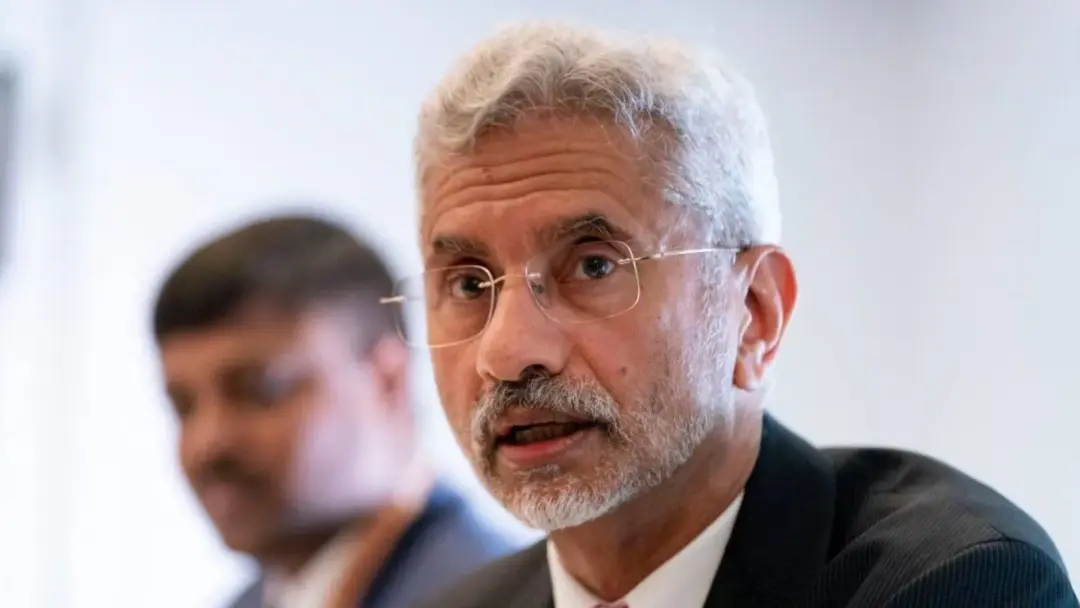
India reaffirms energy security after US passes Russia sanctions bill
The US House on Wednesday passed the 'Lindsey O. Graham Sanctioning Russia and Iran Act of 2026', giving the US President power to impose tariffs of up to 100% on nations buying Russian oil and gas. Responding, India's Ministry of External Affairs said it remains firmly committed to energy security for its 1.4 billion people through diversified sourcing, and would take all necessary measures to protect trade and economic interests. President Donald Trump is yet to sign the bill.
Source
Indian Express — India · read the original report ↗
Desk check · compared with the source
What the desk checked (5)
- The US House passed the 'Lindsey O. Graham Sanctioning Russia and Iran Act of 2026' on Wednesday, allowing tariffs of up to 100% on buyers of Russian oil. — Attributed to the source's account of the US House vote; no vote count or direct citation given.
- India remains firmly committed to ensuring energy security for its 1.4 billion people through diversified sourcing. — Directly quoted from the Ministry of External Affairs statement.
- India bought EUR 4.5 billion of Russian crude in June, a record high and up 34% month-on-month. — Figure attributed to a CREA report and appears consistently in the source.
- India was the second-largest buyer of Russian fossil fuels in June 2026, importing EUR 5.5 billion of hydrocarbons. — Attributed to CREA; component figures (crude, oil products, coal) are internally consistent with the total.
- The Bill will now be signed by US President Donald Trump. — Stated in the source as a pending step, not a completed action; no source cited.
Analysts’ view opinion
The bill passed by the US House does not name India as a target, yet politically it could become a lever that squeezes New Delhi. The MEA's wording is carefully calibrated — "energy security for 1.4 billion people" is a sovereignty argument aimed at the domestic audience, while "diversified sourcing" is the accommodating signal aimed at Washington. Because the tariff power is discretionary rather than automatic, it is likely to function more as bargaining leverage than as immediate punishment.
- Leaving the 100% tariff to presidential discretion converts the law into a pressure instrument usable in trade negotiations rather than a fixed penalty.
- The Indian government faces a two-sided political risk: stepping back from discounted crude invites fuel-price pain, while holding firm invites friction with Washington.
- Promising to work with trade and industry bodies spreads the political burden of any fallout beyond the government alone.
- That this is the first major pro-Ukraine measure Congress has passed in over two years suggests hardening cross-party sentiment in US politics on Russian energy revenues.
- China's larger share of Russian crude gives Delhi a diplomatic talking point — singling out India alone would be open to charges of selectivity.
What to watch — Watch whether Trump, after signing, deploys the tariff power quickly or holds it back as a bargaining chip in trade talks, and how India's opposition parties frame the issue at home.
The story does not establish that tariffs will actually be imposed on India, on what timeline or at what level, nor does it spell out what New Delhi's "all necessary measures" would involve.
Deep dive
Research brief · 8 facts · 4 dates · exam-readyThe brief
Context
The US House of Representatives has passed the 'Lindsey O. Graham Sanctioning Russia and Iran Act of 2026', which would give the US President discretionary power to levy tariffs of up to 100% on countries that buy Russian oil and gas. India and China, the two largest buyers of Russian crude and coal, are the most exposed. India's Ministry of External Affairs responded by reaffirming its commitment to energy security for 1.4 billion people through diversified sourcing, and said it would take all necessary measures to protect its trade and economic interests. President Donald Trump has yet to sign the Bill into law.
Key facts
- The US House passed the 'Lindsey O. Graham Sanctioning Russia and Iran Act of 2026' on Wednesday; it awaits President Donald Trump's signature.
- The Bill gives the US President discretionary power to impose tariffs of up to 100% on major foreign buyers of Russian crude and natural gas.
- It imposes targeted sanctions on vessels, logistical entities and maritime operators transporting discounted Russian oil below market caps, and penalises Russian leadership, officials, banks and energy firms.
- It is described as the first major pro-Ukraine measure passed by the US Congress in over two years.
- CREA: India purchased EUR 4.5 billion of Russian crude in June 2026, a record high, rising 34% month-on-month.
- CREA: India was the second-largest buyer of Russian fossil fuels in June 2026, importing EUR 5.5 billion of hydrocarbons — crude 83% (EUR 4.5 bn), oil products EUR 488 mn, coal EUR 444 mn.
- Between December 5, 2022 and June 2026, China took 37% of Russian coal exports and India 19%; in crude, China accounted for 50% and India 36% of Russia's oil exports.
- India was Russia's seventh-largest LNG importer till end-June 2026; India's total crude import volumes rose 5.4% month-on-month in June 2026.
Timeline
- December 5, 2022Start of the CREA tracking period for Russian fossil fuel export shares following price cap enforcement.
- June 2026India's imports of Russian crude reach a record high, up 34% month-on-month; India is the second-largest buyer of Russian fossil fuels (EUR 5.5 bn).
- Wednesday (as reported)US House passes the Lindsey O. Graham Sanctioning Russia and Iran Act of 2026.
- After House passageIndia's MEA issues a statement reaffirming energy security commitment; Bill awaits President Trump's signature.
Who has a stake
- Ministry of External Affairs, India (led by S Jaishankar) — Must defend India's energy sourcing choices and manage the bilateral relationship with the US while protecting trade and economic interests.
- US President Donald Trump — Holds discretionary power under the Bill to impose up to 100% tariffs; has said the US intends to cut off all sources of funds for Russia.
- US Congress — Passed the Bill as the first major pro-Ukraine measure in over two years, expanding enforcement against Russia and Iran.
- Russia — Faces disruption of energy revenues, sanctions on its leadership, banks, energy firms, vessels and maritime operators.
- China — Largest buyer of Russian crude (50%) and coal (37%); exposed to the same tariff threat as India.
- Indian trade and industry bodies — Government has said it will work closely with them to deal with the implications of these developments.
- Indian consumers / 1.4 billion people — Energy security and price stability depend on continued access to diversified and discounted crude sources.
Why it matters
Russian crude has become the single largest component of India's oil import basket, and a 100% US tariff threat directly links India's energy sourcing to its largest export market. The MEA has flagged consequences not only for the India-US bilateral relationship but also for the international energy market, where any abrupt Indian pullback could tighten global supply. How New Delhi balances cheap energy, strategic autonomy and trade access will shape both household costs and foreign policy choices.
UPSC angle
Prelims pointers
- 'Lindsey O. Graham Sanctioning Russia and Iran Act of 2026' — passed by US House; allows up to 100% tariffs on buyers of Russian oil and gas.
- CREA (Centre for Research on Energy and Clean Air) tracks Russian fossil fuel export flows and buyer shares.
- June 2026: China 50% and India 36% share of Russian crude exports; coal shares (Dec 5, 2022–June 2026) — China 37%, India 19%.
- India was Russia's 7th-largest LNG importer till end-June 2026 and 2nd-largest buyer of Russian fossil fuels in June 2026 (EUR 5.5 bn).
- MEA's stated approach: energy security for 1.4 billion people through diversified sourcing and evolving market dynamics.
- The Bill also broadens enforcement mechanisms against Iran's military and energy trade.
Mains framing
The US House's passage of the Lindsey O. Graham Sanctioning Russia and Iran Act of 2026 converts India's energy sourcing decisions into a trade-policy vulnerability: the Bill empowers the US President to levy tariffs of up to 100% on major buyers of Russian crude and gas, alongside targeted sanctions on shipping, logistics operators, Russian banks, officials and energy enterprises. India's exposure is substantial — CREA data show record Russian crude purchases of EUR 4.5 billion in June 2026, a 34% month-on-month rise, with Russia accounting for 36% of India's crude sourcing pattern and India importing EUR 5.5 billion of Russian hydrocarbons that month. The causes lie in the post-2022 availability of discounted Russian barrels and India's import dependence for a population of 1.4 billion; the implications are twofold, as the MEA itself argued to US interlocutors — a strain on the bilateral relationship and disruption in the international energy market if a large buyer is forced to exit abruptly. The way forward, as articulated in the source, is diversified sourcing responsive to evolving market dynamics, sustained high-level engagement with Washington, and close coordination with Indian trade and industry bodies, while retaining the option of all necessary measures to protect trade and economic interests. The unsigned status of the Bill leaves a window for diplomacy.
Key terms
- Lindsey O. Graham Sanctioning Russia and Iran Act of 2026
- US legislation passed by the House allowing the President to impose up to 100% tariffs on buyers of Russian oil and gas and sanction related entities.
- CREA
- Centre for Research on Energy and Clean Air — research body whose reports track Russian fossil fuel exports and importer shares.
- Energy security
- As used by the MEA, assured and affordable energy supply for India's 1.4 billion people through diversified sourcing and market-based decisions.
- Price/market cap on Russian oil
- Reference threshold below which discounted Russian oil is traded; the Bill sanctions vessels and operators shipping oil below such caps.
- Secondary tariffs
- Duties imposed not on the sanctioned country but on third countries that continue buying its oil and gas — the core mechanism of this Bill.
Practice questions
- Examine how US secondary sanctions on buyers of Russian energy test India's doctrine of strategic autonomy. What options does India have to safeguard both energy security and trade interests?
- "India's dependence on discounted Russian crude is an economic necessity, not a political choice." Critically evaluate in light of recent import data.
- Discuss the likely impact on global oil markets if major buyers such as India and China were compelled to reduce Russian crude purchases under the threat of 100% tariffs.
Grounded only in the source report — figures and dates are the source's, not inferred.